


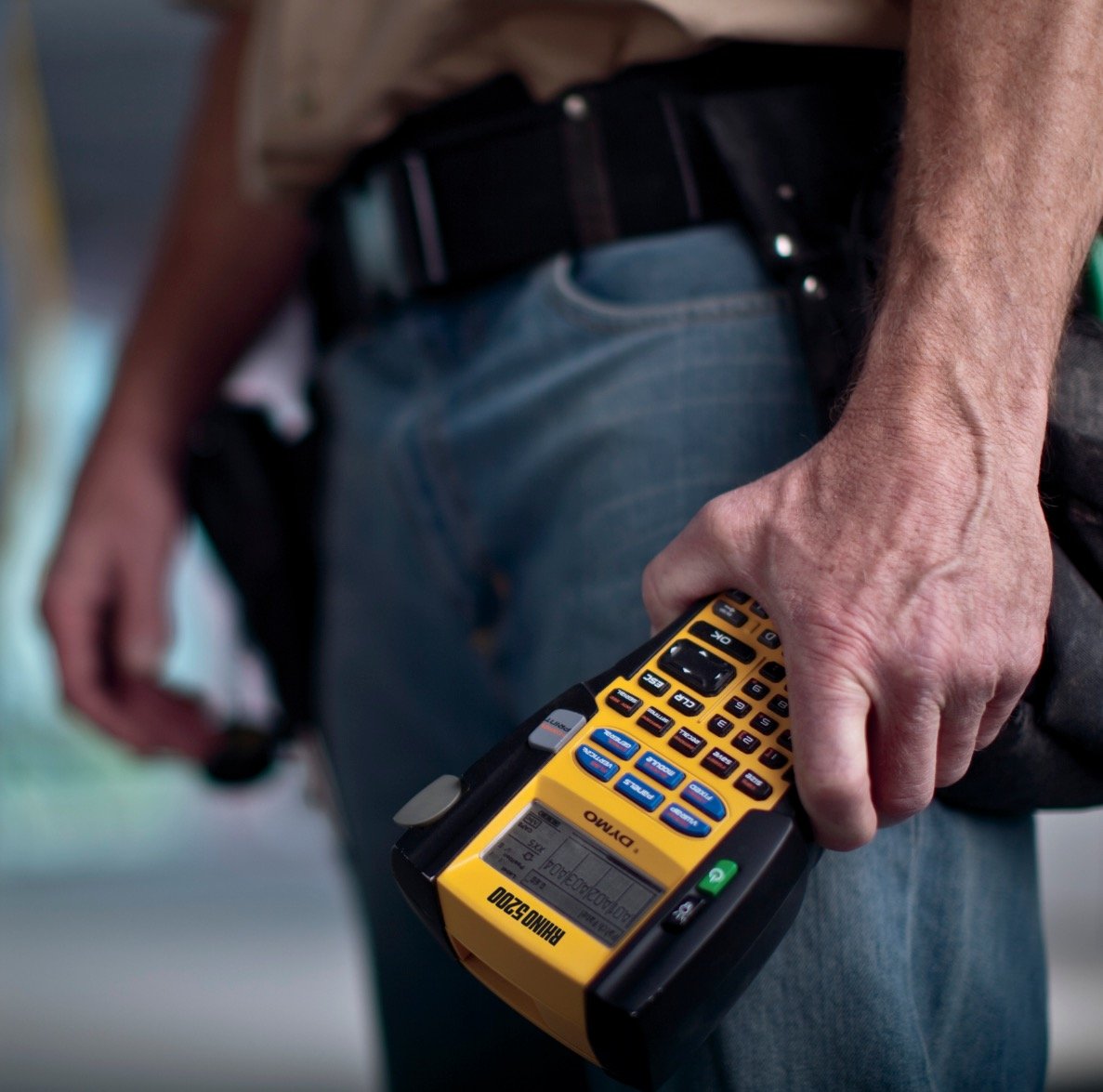
How much does a failed site inspection actually cost your business when the culprit is something as small as a peeling cable label? Many Australian contractors understand the frustration of wasting expensive tape on manual formatting or watching standard labels fail in harsh, high-heat environments. Mastering the dymo rhino 5200 allows you to eliminate these risks and ensure your work meets rigorous industrial standards on every project.
We recognise that reliability and efficiency are your top priorities when working in demanding environments like server rooms or construction sites. This guide will show you how to leverage the specialised capabilities of the Rhino series to reduce your labelling time and ensure permanent legibility. We will explore the technical specifications of this industrial tool and provide practical advice on selecting the correct supplies from specialists like DymoOnline to ensure your work remains fully compliant with current Australian requirements.
Key Takeaways
- Understand the critical differences between industrial labelling and standard office printing to ensure your tags withstand harsh Australian conditions.
- Master the technical requirements of the ANSI/TIA/EIA-606-B standard to ensure your datacom and electrical work is fully compliant.
- Learn to select the appropriate dymo rhino 5200 tape materials, including heat shrink tubing and flexible nylon, for permanent legibility.
- Discover how to use specialised hot keys to quickly format labels for complex components like patch panels and terminal blocks.
- Implement simple maintenance routines for your print head and battery pack to maximise the longevity of your industrial labelling investment.
Understanding the Dymo Rhino 5200 Industrial Standard
The dymo rhino 5200 isn't a standard label maker designed for file folders or kitchen jars. It's a precision instrument engineered for the rigours of Australian worksites. Unlike consumer models, this device features a ruggedised exterior with integrated rubber bumpers. These protect the internal components from the inevitable drops and knocks that occur in server rooms or on construction sites. It's built to handle the pace of a professional environment where downtime is a significant cost.
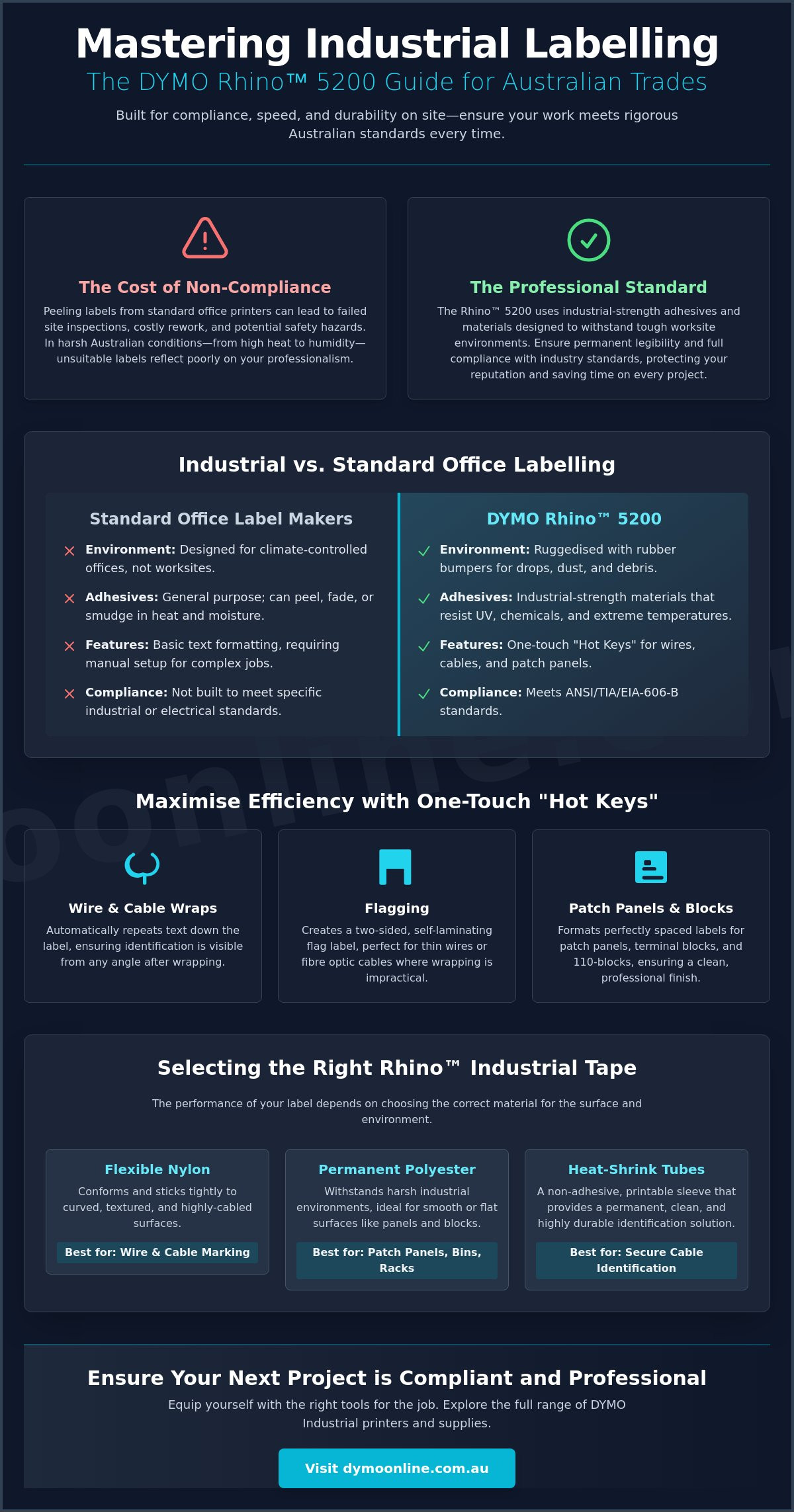
The distinction between office and industrial labelling is found in both the adhesive and the interface. While office printers focus on aesthetics, the Rhino series prioritises durability and speed. The integrated "Hot Key" system allows you to automatically format labels for wires, cables, and patch panels with a single press. This eliminates the need for manual spacing and font adjustments, ensuring your labels fit perfectly every time without wasting expensive tape.
To better understand this concept, watch this helpful video:
Why Industrial Labelling Matters in Australia
In the Australian trade sector, clear identification is a requirement for safety and future maintenance. Poorly labelled switchboards or data racks create confusion during repairs, leading to increased labour costs and potential hazards. Professional contractors use industrial grade tools to protect their reputation. If a label peels off because it couldn't handle the heat of a Western Australian summer or the humidity in Queensland, it reflects poorly on the original installer. Using the right materials from the start prevents the expensive and time consuming task of re-labelling an entire site after a failed inspection.
The Evolution of the Rhino Series
The 5200 occupies a vital middle ground within the Dymo Industrial Rhino range. It provides a deeper feature set than the entry level Rhino 4200, which is often preferred for its smaller footprint and portability. While the 4200 is excellent for quick fixes, the dymo rhino 5200 is designed for high volume users who need consistent performance across large scale installations. It bridges the gap between basic identification and complex asset management, offering the durability required for heavy duty applications without the extreme bulk of larger specialised units. This balance makes it the standard choice for data communications and electrical professionals across the country.
Key Features and Industrial Compliance Standards
Passing a rigorous site inspection in Australia requires more than just clear handwriting; it demands adherence to international infrastructure benchmarks. The dymo rhino 5200 is engineered to meet ANSI/TIA/EIA-606-B standards, which govern the labelling of telecommunications and industrial cabling systems. By using a device that understands these requirements, you ensure that every patch panel, terminal block, and 110-block is marked according to professional expectations. This level of consistency is what separates a high-quality installation from a DIY effort that might fail a compliance audit.
Efficiency on-site is often hampered by the need to find specific icons or symbols. The 5200 simplifies this with a library of over 100 pre-programmed industry symbols. These aren't just generic graphics; they are specialised markers for electrical, datacom, security, and audio-visual trades. Whether you need an Ohm symbol, a ground icon, or a specific warning marker, you can access them instantly without scrolling through endless menus. If you have questions about specific symbol availability for your trade, you can speak with our technical team for detailed guidance.
Mastering the One-Touch "Hot Keys"
The standout feature for most Australian contractors is the "Hot Key" interface. These buttons provide instant formatting for common tasks:
- Wire and Cable Wraps: This mode repeats your text around the cable, ensuring the identification is visible from any angle.
- Flagging: Ideal for thin wires or fibre optic cables where a wrap is impractical. It creates a "T" shaped label with the text printed on both sides of the flag.
- Fixed Length: This setting is vital for ensuring labels fit perfectly within the defined boundaries of a faceplate or a specific piece of equipment, effectively eliminating tape waste.
Advanced Serialization and Barcoding
Managing large-scale cable runs requires an organised approach to numbering. The dymo rhino 5200 offers both simple and advanced serialization, allowing you to print sequences of labels that increment automatically. This feature significantly reduces manual entry errors and saves hours of labour on large projects. Additionally, the device can print Code 39 and Code 128 barcodes on 19mm labels. This capability is essential for businesses that use asset management software to track infrastructure components, providing a bridge between physical labelling and digital record-keeping.
Practical Labelling Solutions for Australian Trades
The dymo rhino 5200 translates technical standards into practical results across diverse Australian work environments. Whether you're a commercial electrician wiring a new office block or a technician managing a massive data hall, the ability to produce durable labels on-site is essential. This device isn't just for cables; it's a comprehensive identification system for assets, safety equipment, and complex infrastructure. It's built to perform in the field, where conditions are rarely perfect and time is always at a premium.
Electrical and Solar Installations
For electricians, the clarity of a distribution board can be the difference between a safe maintenance procedure and a dangerous error. Labelling circuit breakers and safety switches with high-visibility vinyl tapes ensures that any future contractor can identify circuits instantly. In the solar industry, the dymo rhino 5200 is particularly valuable for marking inverter connections and outdoor electrical boxes. Because Australian solar arrays are exposed to intense UV radiation, using industrial grade materials is non-negotiable. Standard labels often fade or crack within months, but the industrial tapes designed for the Rhino series maintain their legibility and adhesive strength despite temperature fluctuations and sun exposure.
- Clearly identify emergency shut-offs and isolation switches for rapid response.
- Mark phase wires and neutral bars within switchboards to prevent wiring errors.
- Use colour-coded tapes to distinguish between AC and DC circuits in solar installations.
Data Centres and Structured Cabling
Precision is the primary requirement in high-density networking environments. When you're dealing with hundreds of Cat6 or fibre runs, even a slight misalignment in labelling leads to chaos during troubleshooting. The Rhino 5200 allows for exact spacing on patch panel labels, ensuring each port is clearly numbered without overlapping. This level of organisation is a hallmark of professional work and is often highlighted in our guide on The Best Cable Label Maker for Australian Professionals. Beyond the cables, labelling server racks and network hardware helps technicians quickly locate specific equipment during outages, reducing downtime.
In warehouse settings, the device serves as a reliable asset management tool. You can create permanent barcodes for racking systems or identify heavy machinery and safety equipment. The versatility of the dymo rhino 5200 means you don't need multiple devices for different tasks; one rugged tool handles everything from the smallest fibre optic cable to the largest industrial shelving unit. It's about building a consistent, professional system that stands up to the daily grind of an Australian warehouse or industrial site.
Selecting the Right Rhino Industrial Tapes and Heat Shrink Tubing
The performance of your dymo rhino 5200 depends entirely on the consumables you load into it. Selecting the correct material from the range of Rhino Industrial IND Tapes is the most effective way to prevent labels from peeling or fading over time. Flexible Nylon is the standard choice for wire and cable wraps because it conforms to curved surfaces and resists the memory effect that causes standard labels to flag or pop off. In contrast, Vinyl is a versatile all-rounder with excellent UV and chemical resistance, making it suitable for both indoor and outdoor applications where exposure to the elements is a concern.
For highly textured, flat, or even slightly oily surfaces, Permanent Polyester provides a stronger adhesive bond. It's vital to use genuine DYMO labels rather than generic alternatives. Non-genuine tapes often leave adhesive residue on the internal components or cause jams that can damage the print head. Maintaining the integrity of your hardware ensures it remains a reliable partner for years of service on busy Australian worksites. If you're unsure which adhesive type is best for your specific site conditions, contact our specialists for technical advice on material compatibility.
Heat Shrink Tubing for Permanent Wire Marking
When a standard wrap isn't enough, many professionals turn to heat shrink tubing for professional cable labelling. This material provides the most secure and permanent identification available. These tubes feature a 3:1 shrink ratio, which means they slide easily over connectors and shrink tightly around the wire once heat is applied. This creates a fit that won't slip or slide, even under heavy vibration. These tubes are flame-retardant and oil-resistant, meeting the strict safety requirements of industrial plants and high-voltage environments.
Tape Widths and Colour Coding
Visibility is a key component of site safety and efficiency. While the dymo rhino 5200 supports widths from 6mm to 19mm, standardising on 19mm for large conduits and distribution boards ensures your text is legible from a distance. Colour coding further enhances organisation. Using yellow or orange tapes for hazard warnings or red for emergency systems allows for instant visual recognition by any technician on-site. For those managing extensive infrastructure projects, purchasing Bulk Dymo packs is a practical way to ensure your team never runs out of essential supplies mid-job.
Maintaining and Maximising Your Rhino 5200 Investment
Owning a dymo rhino 5200 is an investment in your professional reputation. To ensure it continues to perform at its peak, regular maintenance is essential. Australian worksites are notoriously harsh, often exposing equipment to fine dust, grit, and extreme temperatures. These elements can impact the sensitive thermal print head. If you notice horizontal streaks or light patches on your labels, it's likely that debris has settled on the heating element. Cleaning the print head with a specialised cleaning pen or a cotton swab dipped in isopropyl alcohol will restore clarity and prevent permanent damage to the hardware.
Adhesive build-up on the cutter blade is another common issue that can lead to frustration on-site. Industrial tapes have aggressive adhesives designed to stay put, but small amounts can transfer to the blade during each cut. Over time, this residue makes the blade sticky, leading to tape jams or jagged edges. Wiping the blade carefully with a cleaning solution will maintain a sharp, clean cut every time. We recommend doing this at the end of every major project to keep the mechanism moving freely.
Battery management is a critical factor in maintaining site efficiency. The dymo rhino 5200 offers the flexibility of using either a Lithium-ion rechargeable pack or six AA batteries. For the professional contractor, the Li-ion pack is the preferred option. It offers longer run times and more consistent voltage, which is vital for maintaining high print density. If you rely on AA batteries, you may encounter "Low Battery" errors more frequently, especially when printing on wider 19mm tapes. Keeping a spare AC adapter in your kit ensures you're never caught out during a critical labelling phase.
Extending the Life of Your Label Maker
Site protection is about more than just cleaning; it's about prevention. Storing your device in a dedicated hard-shell carry case when it's not in use protects the keyboard and screen from impact and environmental contaminants. If you encounter software glitches or persistent errors, our Dymo Troubleshooting Guide provides a wealth of expert solutions tailored for Australian businesses. Taking these small steps will significantly extend the service life of your equipment.
The DymoOnline Specialist Advantage
When you source your equipment from DymoOnline, you gain access to genuine Australian stock and professional support. We stock a comprehensive range of Dymo Accessories, including replacement chargers and batteries, to ensure your kit is always ready for the next job. Ultimately, the Rhino 5200 is an industrial workhorse that rewards proper care with years of reliable service, helping you maintain compliance and efficiency across all your projects.
Future-Proof Your Worksite with Professional Labelling
Mastering your on-site identification isn't just about aesthetics; it's about ensuring safety and long-term operational efficiency. By aligning your workflows with industrial standards and utilising the specialised features of the dymo rhino 5200, you eliminate the risks associated with non-compliant labelling. Choosing the correct materials, such as heat shrink tubing or flexible nylon, ensures your work remains legible in the most demanding Australian environments. These tools provide the peace of mind that comes with knowing your installation will pass any inspection.
DymoOnline is your specialist Australian partner for professional labelling solutions. We provide nationwide shipping from our local warehouses and offer expert support to help you meet complex industrial requirements. Whether you're managing a large-scale data centre or a solar installation, we have the genuine supplies you need to get the job done right. Accessing the right tools shouldn't be a hurdle to your productivity.
Browse the Genuine Dymo Rhino 5200 and Industrial Tapes at DymoOnline to secure the tools you need for your next project. We look forward to helping you achieve a new level of professionalism and efficiency on every Australian worksite.
Frequently Asked Questions
Does the Dymo Rhino 5200 print on heat shrink tubing?
Yes, the dymo rhino 5200 is fully compatible with industrial heat shrink tubing. It supports tubing widths of 6mm, 9mm, 12mm, and 19mm, providing a permanent and secure identification solution for wires and cables. This material is particularly effective in high-vibration environments where traditional adhesive labels might fail. You simply print the label and apply heat to achieve a secure 3:1 shrink ratio for a professional finish.
Is the Rhino 5200 compatible with D1 standard tapes?
Yes, this device is compatible with D1 standard tapes in addition to the specialised industrial range. This versatility allows you to switch between standard office labelling and heavy-duty industrial tasks without changing machines. While D1 tapes are suitable for flat, clean surfaces, the industrial range is better for curved or textured applications. It is a practical way to manage multiple labelling requirements with a single professional tool.
What is the difference between the Rhino 5200 and the Rhino 4200?
The primary difference lies in feature depth and volume capacity. While the Rhino 4200 is designed for portability and quick fixes, the dymo rhino 5200 is a more robust tool for large-scale installations. It features a larger library of symbols and more advanced "Hot Key" options for complex formatting. The 5200 is built for contractors who require consistent, high-volume performance and advanced serialization on major commercial sites.
How do I reset my Dymo Rhino 5200 if it freezes?
You can perform a hard reset by turning the device off and then holding down the "6" and "On/Off" buttons simultaneously. Release the buttons once the screen displays a reset message. This procedure clears the internal memory and restores factory settings, which is often the quickest way to resolve a frozen screen or software glitch. Remember to save any custom templates before performing this action to avoid data loss.
Can I use generic label tapes in my Rhino 5200?
We strongly advise against using generic or compatible tapes in your industrial printer. Non-genuine consumables often use inferior adhesives that leave residue on the internal cutter and print head, leading to frequent jams and reduced print quality. Using genuine DYMO supplies ensures the longevity of your hardware and maintains the professional standard of your work. It also protects your investment from potential damage caused by poor-quality cartridges.
What industrial standards does the Rhino 5200 help me meet?
This device is specifically engineered to help you comply with the ANSI/TIA/EIA-606-B industrial standard. These guidelines govern the identification of telecommunications infrastructure, ensuring that every component is marked correctly for future maintenance. Using a compliant tool ensures your work passes rigorous site inspections and meets the requirements of major Australian infrastructure projects. It is a critical factor for maintaining professional integrity and building client trust.
How many symbols are included in the Rhino 5200 library?
The internal library contains over 100 pre-programmed industry symbols tailored for electrical, datacom, and security professionals. These include common markers such as ground, Ohm, and various warning icons, which can be inserted into any label with a few keystrokes. This extensive library eliminates the need to describe components manually, saving significant time and ensuring your labels align with standard trade conventions used throughout Australia.
Does the Rhino 5200 come with a rechargeable battery?
Inclusion depends on whether you purchase the standalone unit or the comprehensive kit. The kit version typically includes a Lithium-ion rechargeable battery and an AC adapter, while the standalone unit may arrive configured for AA batteries. We recommend the rechargeable pack for professional use, as it provides more consistent power for high-density printing. It is a more sustainable and cost-effective solution for long days on a busy worksite.
General Information
This article is provided as general information only to help customers compare and choose DYMO label makers, label printers, label tapes, label rolls, shipping labels, address labels, barcode labels and related labelling supplies. Product details, specifications, compatibility, availability, pricing and suitability may vary. Always check the individual product page, manufacturer information, printer model compatibility and label size requirements before purchasing or using a product.
