
The Complete Guide to DYMO in Australia: Choosing the Right Labelling Solution in 2026
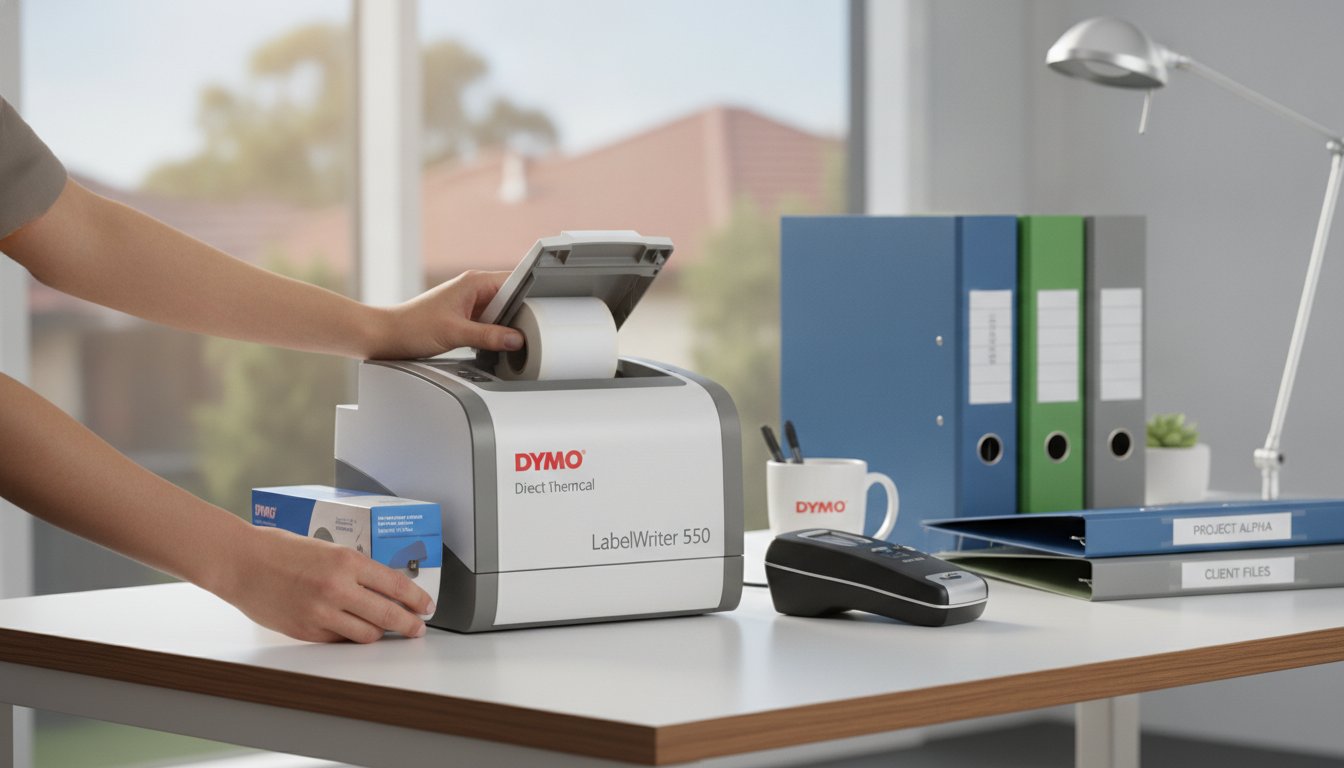
What if the quest to save a few dollars on generic labels is actually the primary cause of your office's most frustrating technical delays? It's a common scenario across Australian warehouses and medical centres where a jammed printer brings a busy afternoon to a complete standstill. You likely chose a dymo system because you value efficiency and professional results, not because you wanted to spend your time clearing adhesive residue from a print head.
We understand that the technical differences between D1 tapes and high-speed thermal rolls can be confusing. This guide is designed to help you master the entire ecosystem by matching the right hardware and genuine labels to your specific professional or home environment. We'll provide a clear roadmap through the latest 2026 hardware updates, including the LabelWriter 5 series and its Automatic Label Recognition technology. You'll learn how to choose a setup that handles your specific volume and meets the latest Australian labelling regulations, such as PEAL compliance, while avoiding the errors common with non-genuine supplies.
Key Takeaways
- Understand why direct thermal technology is the preferred standard for Australian professional environments, eliminating the need for expensive ink or toner.
- Discover how the Automatic Label Recognition feature in the dymo LabelWriter 550 and 550 Turbo simplifies your workflow by tracking label size and remaining count.
- Learn to distinguish between the portability of the LabelManager series for offices and the rugged Rhino series designed for Australian trade standards.
- Protect your hardware investment by understanding the technical risks associated with non-genuine labels and the benefits of choosing authentic supplies.
- Stay ahead of 2026 regulatory changes, including PEAL and compostable labelling mandates, by selecting the correct adhesive and label type for your industry.
The DYMO Ecosystem: Professional Labelling Standards for Australian Industries
Professional organisation is often the difference between a chaotic workspace and a productive one. In Australia, the dymo ecosystem has established itself as the premier solution for both residential and commercial labelling needs. Since the early days of the Dymo Corporation history, the brand has evolved from simple mechanical embossers to sophisticated digital printing systems that serve sectors ranging from medical administration to heavy-duty electrical contracting. This longevity is built on a foundation of reliability and specialised engineering that addresses the specific requirements of the Australian workforce.
At the heart of this ecosystem is direct thermal printing technology. Unlike traditional inkjet or laser printers, these units don't require expensive ink cartridges or toner ribbons. Instead, they use a thermal print head to apply heat directly to heat-sensitive labels. This process creates crisp, high-contrast text and barcodes that are essential for logistics and inventory management. It's a no-nonsense approach to printing that prioritises efficiency and reduces the moving parts that typically lead to hardware failure.
To better understand how this technology functions in a practical setting, watch this helpful video demonstrating a popular handheld model:
Why Thermal Printing Wins in the Modern Office
The shift toward thermal solutions is driven by a need to maximise output while minimising operational costs. For high-volume Australian warehouses, the elimination of toner ribbons means fewer interruptions and reduced maintenance cycles. There's also a significant environmental benefit to consider. Many genuine label rolls are now BPA-free, and the lack of discarded ink cartridges helps businesses reduce their overall consumable waste. It's a practical choice for any organisation looking to streamline its administrative footprint without compromising on print quality.
Navigating the Product Series: A Quick Overview
Choosing the right tool depends entirely on your specific environment. The LabelWriter series is the high-speed desktop standard, perfect for shipping labels and visitor management systems. For those requiring portability, LabelManager tools provide versatile handheld options for organising files and storage bins. Trade professionals typically rely on the industrial Rhino range, which features ruggedised housing and specialised adhesive options for site work and cable management. At DymoOnline, we provide the expert support and genuine equipment needed to ensure your chosen series performs exactly as expected.
Desktop Efficiency: The DYMO LabelWriter 5 Series
The transition from the legacy 450 series to the current dymo LabelWriter 5 series represents a significant shift in desktop printing technology. While the older models were reliable workhorses, the 5 series introduces a more secure and intelligent hardware architecture. This evolution ensures that the printer and the software work in perfect synchronisation, reducing the configuration errors that often plague office environments. By moving to this newer platform, businesses gain access to more robust connectivity and improved print head management, which are essential for maintaining high-output workflows in busy Australian offices.
The defining feature of this generation is Automatic Label Recognition technology. Each genuine roll is equipped with a small sensor that allows the printer to communicate directly with the software. Once you drop a roll into the LabelWriter 550 or 550 Turbo, the system instantly identifies the label size, type, and colour. More importantly, it tracks exactly how many labels remain on the roll. This prevents the frustration of starting a large print job only to run out of supplies halfway through. It's a practical solution that eliminates the need for manual calibration and ensures your digital layout always matches the physical media.
LabelWriter 550 vs. 5XL: Which Desktop Unit Do You Need?
Choosing between the standard models and the wide-format specialist depends on your daily output requirements. The LabelWriter 550 and the 550 Turbo are the standard for most administrative tasks. The Turbo model is particularly efficient, capable of printing up to 90 labels per minute. These units are ideal for barcodes, visitor badges, and standard mailouts. They provide a compact footprint that fits easily on a reception desk or in a medical administration centre.
For those managing e-commerce operations, the Dymo LabelWriter 5XL is the necessary choice. It's specifically engineered to handle wide-format printing, accommodating labels up to 104mm wide. This makes it compatible with the standard 104mm x 159mm shipping labels required by Australia Post and other local couriers. While it prints at a slightly lower speed of 53 labels per minute compared to the Turbo, its ability to produce full-sized freight labels directly from platforms like Shopify or eBay makes it an invaluable asset for logistics.
Optimising Your Shipping Workflow
Efficiency in shipping involves more than just speed; it requires compliance and accuracy. Using LW standard address labels ensures that your mailouts maintain a professional appearance that reflects your brand's integrity. When preparing products for sale, it's also vital to ensure your packaging meets Australian product labelling laws. The 5 series hardware supports this by providing high-resolution thermal printing that remains legible throughout the entire transit process.
If you're unsure which desktop configuration will best serve your current volume, feel free to reach out to our specialist team for tailored advice on hardware and label compatibility.
Portable Precision: LabelManager and LetraTag for On-the-Go Tasks
While the LabelWriter series provides high-speed desktop efficiency, many tasks require immediate, on-the-spot printing. Handheld units offer the flexibility to label items exactly where they sit, from the back of a server rack to the top shelf of a warehouse. The LabelManager 160 serves as the entry-level professional standard for dymo users, offering a familiar QWERTY keyboard layout. This design allows for faster typing and fewer mistakes compared to alphabetical pads, making it a staple in Australian office supply cupboards. These portable tools bridge the gap between a fixed workstation and the dynamic needs of a busy workplace.
The LabelManager Advantage: Professional D1 Tapes
The core strength of the LabelManager series lies in its compatibility with D1 standard tapes. These labels are engineered for versatility; they are UV-resistant, water-resistant, and remain stable across a wide range of temperatures. This durability makes them the preferred choice for asset tagging, shelf labelling, and long-term filing cabinet organisation where longevity is a priority. For shared office environments, the LabelManager 210D is an excellent alternative, offering a larger screen and more memory for frequently used label formats. It's a robust solution that ensures consistent results across multiple departments.
LetraTag: Simplifying Home Organisation
For residential applications, the LetraTag series provides a budget-friendly way to maintain an orderly household. These units are highly effective for organising pantries, school supplies, and storage boxes. One of the primary advantages of this series is the variety of LetraTag plastic and paper tapes available, including iron-on fabric options. This fabric tape is particularly useful for Australian families during the "back to school" rush, allowing parents to quickly label uniforms and hats with heat-set adhesives that withstand regular washing. Whether you are categorising craft supplies or marking lunchboxes, the LetraTag offers a practical, no-nonsense approach to home management.
This level of organisation is also ideal for personal libraries; for instance, those who source traditional Chinese titles from TPlaza 哈台舘國際中文書店 find that custom labels help categorise their collections efficiently.
By selecting the correct portable unit, you ensure that your labelling remains accurate and professional, regardless of where the task takes you. These handheld devices complement a desktop setup by providing the agility needed for smaller, immediate projects that don't justify a full desktop print run.
Industrial Strength: Mastering the Rhino Series for Trade Work
Trade environments demand a level of durability that standard office equipment cannot provide. While desktop units handle the administrative side of a business, the dymo Rhino series is engineered specifically for the harsh conditions of Australian worksites. These tools are the preferred choice for electricians, data technicians, and maintenance crews who require reliable identification in high-stress settings. Each unit features a ruggedized exterior with integrated rubber bumpers, designed to provide essential drop protection on concrete floors or inside tight ceiling cavities. This no-nonsense construction ensures the hardware continues to perform even after the inevitable bumps of a busy shift; similarly, for those looking to automate their fabrication line, check out TME Systems Pty Ltd for robust collaborative robot welding cells.
Efficiency on-site is often measured by how quickly a technician can move from one task to the next. The Rhino 5200 addresses this by prioritising speed through dedicated "Hot Key" shortcuts. These buttons allow for the instant formatting of wire wraps, flags, and fixed-length labels without the need to navigate complex digital menus. When paired with Rhino Industrial IND labels, the result is a professional finish that stays legible for years, regardless of environmental exposure.
Compliance and Safety in Industrial Labelling
Professional labelling in Australia isn't just about organisation; it's often a matter of safety and regulatory compliance. The Rhino series helps contractors meet professional standards such as ANSI and TIA/EIA 606-A for electrical and telecommunications installations. Achieving this level of compliance requires specialised materials that can withstand chemical exposure and extreme temperatures. Permanent polyester labels are ideal for flat surfaces like patch panels, while flexible nylon is designed to wrap tightly around curved cables without flagging. For a truly permanent solution, heat-shrink tubing provides a high-contrast identification that is shrunk directly onto the wire, ensuring it cannot be removed or lost during future maintenance.
Rhino 6000+: Connectivity for Large-Scale Projects
For complex installations involving hundreds of connections, the Rhino 6000+ offers advanced features that streamline the entire process. This model allows for PC connectivity, enabling technicians to import complex data sets and wire lists directly from office software. It simplifies the formatting of patch panels, terminal blocks, and 110-blocks, reducing the risk of manual entry errors. To support long days on-site, it's equipped with rechargeable lithium-ion batteries, eliminating the need for constant AA replacements. This level of technical sophistication makes it a critical tool for large-scale infrastructure projects across Australia.
If you need help selecting the specific industrial kit or adhesive type for your next project, contact our technical specialists today for expert guidance.

The Genuine Difference: Protecting Your Hardware Investment
The temptation to reduce overheads by purchasing non-genuine label rolls is understandable, yet it often proves to be a false economy. While generic alternatives might appear identical on the surface, they lack the precise engineering required to maintain the longevity of your dymo hardware. Non-genuine labels frequently use inferior adhesives that can ooze when exposed to the heat of a thermal print head. Over time, this buildup leads to persistent jamming and can eventually cause permanent damage to the delicate printing elements. Protecting your investment requires a commitment to authentic supplies that are designed to work in harmony with your specific printer model.
As established in previous sections, the LabelWriter 5 series utilises Automatic Label Recognition technology to ensure a seamless interface between hardware and software. This system is designed to work exclusively with genuine rolls. If you attempt to load a non-genuine roll into a LabelWriter 550 or 5XL, the printer will not function. This isn't merely a software lock; it's a quality control measure that ensures the printer only operates with media that meets strict manufacturing tolerances. To identify authentic products in the Australian market, always look for the "Authentic DYMO Labels" holographic seal or the specific branding on the interior of the roll core.
Why Genuine DYMO Labels Matter in 2026
Technical accuracy is the primary reason to stick with authentic supplies. Precise roll dimensions and backing paper thickness prevent the misalignment issues that often result in wasted labels. The adhesive quality is also a critical factor for the Australian climate. Genuine labels are tested to ensure they stay adhered to surfaces even in the high heat and humidity common in Queensland or Western Australia. Using genuine DYMO accessories and labels is the most effective way to safeguard your warranty. Most hardware failures caused by adhesive seepage from third-party rolls are not covered under standard repair agreements, making the "savings" of generic rolls a significant financial risk.
Buying in Bulk: The Smart Way to Save
For high-volume operations, the most effective way to manage costs without compromising on quality is through bulk procurement. Leveraging bulk DYMO pricing allows large-scale businesses to significantly reduce their cost-per-label. A popular strategy for standard office environments is the "Value Pack" approach, which bundles multiple rolls of standard address labels into a single shipment. This ensures you always have stock on hand while benefiting from a lower unit price. At DymoOnline, we facilitate nationwide shipping for these large-scale corporate orders, ensuring that whether you're in a metropolitan hub or a regional centre, you have access to the authentic supplies needed to keep your workflow moving. Choosing the right labelling solution in 2026 isn't just about the printer on your desk; it's about the quality of the media that passes through it every day.
Future-Proofing Your Australian Labelling Strategy
Achieving a high standard of organisation requires a labelling strategy that balances hardware performance with the durability of your supplies. Whether you are managing an e-commerce warehouse with the LabelWriter 5XL or maintaining critical electrical infrastructure with the Rhino series, the right dymo setup ensures technical accuracy and long-term reliability. By prioritising the LabelWriter 5 series and its intelligent recognition technology, you eliminate the guesswork and technical errors that frequently disrupt a busy Australian workday.
Protecting your investment starts with choosing a partner that understands the specific requirements of the local market. As a specialist Australian supplier, we provide the expert support and administrative transparency needed to build a professional knowledge base for your team. From nationwide shipping out of major metropolitan centres to detailed guidance on genuine label compatibility, we are here to help you maintain an efficient operation.
Browse the full range of genuine DYMO printers and labels at DymoOnline to find the perfect solution for your specific professional environment. We look forward to helping you master your organisational tasks with confidence.
Frequently Asked Questions
Does DYMO require ink or toner to print?
No, dymo printers do not require ink or toner because they utilize direct thermal printing technology. This process uses a heated print head that reacts with a heat-sensitive coating on the labels to create crisp text and images. It's a highly efficient system that eliminates the ongoing cost and mess of cartridges. You only need to replace the label rolls themselves, which reduces maintenance and downtime in busy office or warehouse environments.
What is the difference between D1 tapes and LabelWriter labels?
D1 tapes are continuous plastic tapes used in handheld models like the LabelManager, while LabelWriter labels are pre-sized paper or durable rolls designed for desktop printers. D1 tapes are generally more resistant to water and UV light, making them suitable for asset tagging and shelf organisation. LabelWriter labels are engineered for high-speed applications like address labelling and shipping, where large volumes of individual labels are printed quickly from a workstation.
Can I use generic labels in my DYMO LabelWriter 550?
No, the LabelWriter 550 and other 5-series models are designed to work exclusively with genuine labels. These printers feature Automatic Label Recognition technology that uses a sensor to identify the specific roll type and remaining count. If you attempt to use non-genuine or compatible labels, the printer will not recognise the media and will refuse to print. This ensures technical accuracy and prevents damage to the print head from inferior adhesives.
Which DYMO printer is best for shipping labels in Australia?
The LabelWriter 5XL is the preferred choice for Australian e-commerce sellers requiring full-sized shipping labels. It accommodates wide-format rolls up to 104mm, which is the standard size for Australia Post and most local courier services. While smaller models can print address labels, the 5XL provides the necessary width for 104mm x 159mm freight labels, ensuring your barcodes and shipping data remain legible and compliant with Australian logistics standards.
How do I fix a "Label Not Recognised" error on my DYMO 5-Series?
This error typically occurs if you're using non-genuine labels or if the roll is not seated correctly in the printer. First, verify that the roll has the official branding on the core, as the 5-series hardware requires the internal sensor to detect the authentic chip. If the labels are genuine, try removing the roll and re-inserting it firmly to ensure the sensor can read the tag. Cleaning the internal sensor area with a lint-free cloth can also resolve detection issues.
Are DYMO labels waterproof or suitable for outdoor use?
Standard paper LabelWriter labels are not waterproof, but specialised D1 and Rhino Industrial labels offer significant moisture and UV resistance. For outdoor applications or harsh environments, you should choose permanent polyester or flexible nylon materials from the Rhino range. These are engineered to withstand temperature fluctuations and chemical exposure. If you're labelling items that will be frequently washed or exposed to the elements, always check the specific material data for water resistance.
What is the standard warranty for a DYMO printer purchased in Australia?
Most printers come with a standard manufacturer's warranty, though the specific duration can vary depending on the model and registration status. In addition to the manufacturer's terms, Australian purchasers are protected by the Australian Consumer Law, which provides statutory guarantees that a product must be of acceptable quality and fit for purpose. It's advisable to register your new hardware on the official website to access full support and ensure your warranty remains valid.
Can I print barcodes and QR codes with a DYMO LabelWriter?
Yes, all current LabelWriter models can print high-resolution barcodes and QR codes using the DYMO Connect for Desktop software. The software includes built-in templates for various barcode types, including Code 128 and EAN, which are essential for inventory management and retail. Because the printers use thermal technology, the barcodes are crisp and high-contrast, ensuring they are easily read by standard scanners and mobile devices throughout the Australian logistics network.

Article by
DymoOnline Team
The DYMOOnline Team provides practical guidance for Australian businesses, warehouses, retailers, offices, schools, healthcare workplaces and home users who rely on accurate, efficient labelling. DYMOOnline specialises in DYMO label makers, DYMO label printers, label tapes, label rolls, shipping labels, address labels, barcode labels and labelling accessories, helping customers choose the right labelling products for organisation, mailing, inventory, filing, pricing and workplace efficiency.
General Information
This article is provided as general information only to help customers compare and choose DYMO label makers, label printers, label tapes, label rolls, shipping labels, address labels, barcode labels and related labelling supplies. Product details, specifications, compatibility, availability, pricing and suitability may vary. Always check the individual product page, manufacturer information, printer model compatibility and label size requirements before purchasing or using a product.
Latest News
How to Clean a DYMO Print Head: Maintenance Guide
Imagine you're preparing a batch of urgent shipping labels for an afternoon pickup, only to find eac...
DYMO Labels: A Complete Guide to Selecting the Optimal Labelling Solution
Last Wednesday, an operations manager discovered that hundreds of shipping labels had lost their gri...
Dymo 4XL Driver Download & Install Guide Australia (2026)
We agree that navigating the choice between DYMO Connect and the legacy Label Software feels unnec...
Best DYMO Barcode Printers: 2026 Australian Expert Guide
A single unreadable barcode can halt an entire Australian supply chain, costing your business prec...
DYMO Printer Drivers: 2026 Australian User Guide
Why does your computer suddenly claim your LabelWriter doesn't exist the moment you have fifty urg...
Genuine DYMO D1 Labels: The Ultimate Australian Buyer’s Guide
A single jammed cassette or a set of peeling labels can cost your business far more in lost produc...