
The Best Cable Label Maker for Australian Professionals in 2026

Imagine returning to a commercial switchboard you wired eighteen months ago only to find a "birds nest" of peeling, illegible tape littering the floor. It's a frustrating reality for many Australian sparkies and data technicians who rely on sub-standard adhesives that can't handle the heat of a server rack. You know that a professional finish isn't just about aesthetics; it's about safety, future troubleshooting, and meeting the rigorous demands of AS/NZS 3000:2018.
Selecting the right cable label maker is the difference between a job that stays compliant for years and one that fails an inspection before the ink even dries. We understand that your time on-site is valuable, and you can't afford to wrestle with difficult-to-peel backing or wasted tape from poor formatting. This guide will show you how to choose a device that delivers permanent, legible results in even the harshest industrial environments. We'll explore the technical specifications of the latest industrial models, the importance of specialised materials like heat-shrink tubing, and how to maximise efficiency during fast-paced installations.
Key Takeaways
- Learn why flexible nylon and heat shrink tubing are the industry standards for ensuring permanent adhesion on curved surfaces and high-heat environments.
- Discover how to select a specialised cable label maker that offers pre-programmed formatting for wire wraps, flags, and patch panels to save time on-site.
- Understand the critical differences between the rugged Rhino series and the versatile LabelManager range to match the right tool to your specific project requirements.
- Master professional application tips, including proper cable cleaning and the "Flag" technique, to maintain legibility and meet AS/NZS compliance standards.
- Recognise the long-term benefits of using genuine DYMO labels to protect your equipment and ensure labels remain intact under harsh Australian conditions.
What is a Professional Cable Label Maker?
A dedicated cable label maker is a precision thermal transfer device engineered for the rigours of the field. Unlike standard office printers that use basic adhesives, these specialised tools use heat to bond ink directly to the label material. This creates a smudge-proof, high-contrast finish that remains legible despite exposure to grease, dust, or temperature fluctuations. Most general-purpose devices fail in electrical environments because their labels aren't designed to wrap around small diameters. They often "flag" or peel off within weeks, leaving a mess of unidentifiable wires.
Professional models, such as those found in the industrial Rhino range, feature dedicated "hot-keys." These buttons automate the formatting for wire wraps, flags, and patch panels. Instead of wasting tape through trial and error, a technician can select the specific cable diameter and the machine handles the layout instantly. This efficiency is critical for maintaining cable management best practices on complex sites. Selecting a professional cable label maker ensures that every tag you print meets the high standards required for heavy-duty industrial use.
The Importance of Labelling in the Australian Trade
Compliance with local standards is the primary driver for high-quality identification. In Australia, the AS/NZS 3000:2018 Wiring Rules dictate strict requirements for circuit identification and safety. Non-compliant labelling can lead to failed inspections and costly rework. Beyond the legalities, clear identification significantly reduces downtime during emergency troubleshooting in busy commercial centres. A switchboard that is clearly organised and labelled reflects the quality of your workmanship; it builds trust with the client and ensures that future contractors can work safely and efficiently.
Key Components of an Industrial-Grade Tool
An industrial-grade tool must survive the reality of a construction site. This starts with impact-resistant housing. Many professional models feature integrated rubber bumpers to protect against drops onto concrete or from ladders. A backlit display is another essential feature, as many data cabinets and ceiling voids have poor lighting. Finally, look for rechargeable battery options. Relying on AA batteries mid-shift is inefficient; a high-capacity lithium-ion battery ensures the tool stays operational throughout long days on-site, allowing you to focus on the task at hand.
Choosing the Right Material: Wraps, Flags, and Heat Shrink
The effectiveness of a cable label maker is only as good as the adhesive chemistry of the tape it prints on. In the electrical and data trades, surfaces are rarely flat or clean. Cables have tight radii that naturally want to pull a stiff label apart; a phenomenon known as "flagging." To combat this, professional-grade labels are engineered with specific backings tailored to the application. When you invest in a professional cable label maker, you're also gaining access to a suite of specialised materials designed for the field. Choosing the right media from the Rhino industrial IND range ensures your work remains professional for decades.
Adhering to ACMA cabling standards is a legal requirement for Australian installers. These regulations ensure that all communications cabling is identifiable and safe. Using the correct material isn't just about professional pride; it's about meeting these mandatory Wiring Rules to ensure long-term system integrity. While Flexible Nylon is the standard for curved wires, Permanent Polyester is the preferred choice for flat, textured, or powder-coated surfaces like patch panels and outdoor faceplates. It features a stronger adhesive than standard office tapes, providing resistance against UV exposure and moisture that would cause inferior labels to fail.
When to Use Flexible Nylon Wraps
Flexible Nylon is the preferred choice for Cat6 data cabling and small-diameter electrical wires. The material lacks "memory." It won't try to return to a flat shape once wrapped, which prevents the edges from lifting over time. These labels also provide excellent resistance to chemicals and oils. This makes them suitable for industrial workshops where cables might be handled frequently by technicians with greasy hands. In high-density data centres, the ability for a label to stretch slightly and remain tightly bound is paramount for maintaining organisation.
The Benefits of Heat Shrink Tubing
Heat Shrink Tubing offers a 3:1 shrink ratio. This provides a snug and permanent fit directly onto the wire that is virtually impossible to remove without a blade. Beyond identification, it offers added insulation and strain relief at termination points. Because the label is a sleeve rather than a wrap, it cannot peel or flag. If you're working on high-end industrial projects or switchboard builds, you can find more details in our detailed guide on heat shrink tubing label makers. For specific advice on which material suits your next project, feel free to reach out to our technical team for guidance.
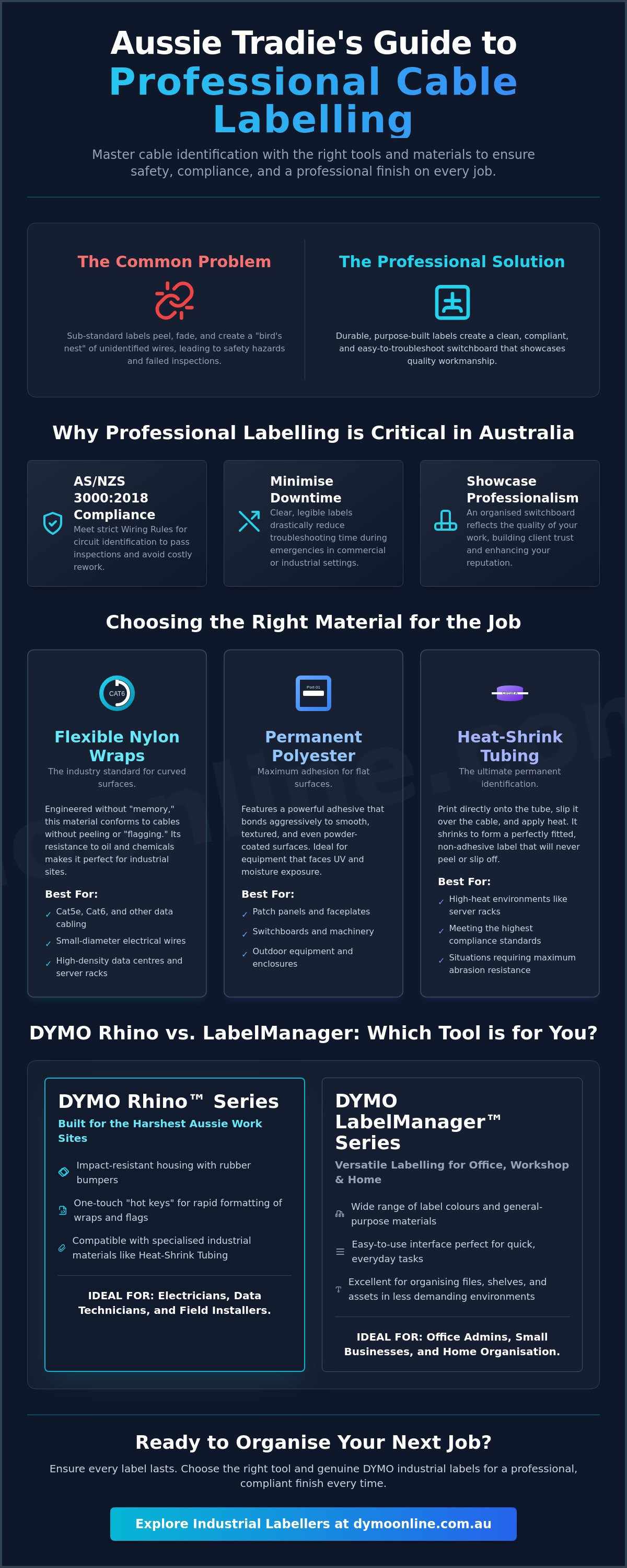
DYMO Rhino vs. LabelManager: Which Range Suits Your Project?
Choosing the correct cable label maker starts with identifying the specific demands of your workspace. While both the Rhino and LabelManager ranges offer reliable thermal printing, they are engineered for vastly different environments. The Rhino series is a ruggedised tool built for the toolbag; the LabelManager is an efficient organiser designed for the desk or the light-duty server room. Understanding the internal engineering and tape compatibility of these two lines is essential for any Australian professional looking to invest in long-term results.
The primary technical difference lies in the tape chemistry they support. Rhino machines are designed to accept IND industrial tapes. These materials are tested against UV radiation, extreme temperatures, and chemical exposure. LabelManager devices typically use D1 standard tapes. While D1 tapes are perfect for identifying flat surfaces like power bricks or monitors, they lack the memory-free backing required for tight wire wraps. Selecting the wrong range for a heavy-duty site often leads to adhesive failure, whereas the right choice ensures your work remains compliant for years.
The DYMO Rhino Series for On-Site Mastery
The Rhino series is the definitive choice for trade professionals who require on-site mastery. These devices are built to survive drops on concrete and the general chaos of a construction site. The Rhino 5200 is an industrial workhorse that balances durability with a comprehensive library of over 100 industry symbols for electrical, pro-AV, and security tasks. For those managing complex data centres, the Rhino 6000+ offers PC-link software. This allows you to import large datasets from Excel, which minimises manual entry and reduces formatting errors during high-volume installations.
The LabelManager Series for Light Industrial and Office Use
The LabelManager series serves as a versatile choice for light industrial and office environments. It's the ideal tool for organising managed IT spaces, retail storerooms, and administrative centres. The LabelManager 160 is a great entry point for small server racks or office filing systems. These models prioritise ease of use and portability, featuring intuitive QWERTY keyboards and quick-access buttons for font sizes. If your work involves identifying peripheral cables in a home office or a school, the LabelManager provides a professional finish without the need for heavy-duty industrial features. It remains a reliable cable label maker for any environment where labels aren't exposed to grease, high heat, or mechanical abrasion.
Professional Tips for Lasting Cable Identification
High-quality hardware is only half the battle. Achieving a permanent result with your cable label maker requires a disciplined on-site methodology. Even the best industrial adhesives will struggle if applied to a cable coated in construction dust or pulling oil. Before you print a single tag, ensure the application surface is clean. A quick wipe with a lint-free cloth or an alcohol-based cleaner removes the barrier between the cable jacket and the adhesive. This simple step ensures maximum bond strength and prevents the edges from lifting months after the job is finished.
For thin wires where a wrap might overlap and obscure the text, the "Flag" technique is the professional standard. By creating a tab that extends from the wire, you maximise text visibility without increasing the cable's bulk. Standardising your colour-coding system also pays dividends during future audits. Using specific colours for data, power, and security circuits allows for rapid visual identification before a technician even touches a multimeter. Finally, protect your investment by regularly cleaning the print head. A build-up of adhesive residue or dust can lead to poor print quality and frustrating label jams. A clean cable label maker is a reliable one.
Step-by-Step Cable Labelling Procedure
Success starts with selecting the correct tape width. For standard Cat6 or smaller electrical wires, 12mm is often sufficient; however, larger bundles or thicker power cables may require 19mm tapes to ensure the text doesn't overlap itself. Once you've measured the diameter, use the "Cable Wrap" hot-key on your device. This feature automatically repeats the text so it's visible from any angle. When applying the label, use firm, even pressure. These are pressure-sensitive adhesives; the bond strength increases significantly when the label is properly pressed into the cable jacket.
Organising Your Labelling Workflow
Efficiency on a large project comes from preparation. If you're managing a complex data centre, use PC-link software to pre-print label batches. This minimises the time spent on a ladder or in a cramped ceiling void. It's also vital to store your industrial Rhino tapes correctly. Keep them in a cool, dry place away from direct sunlight to preserve the adhesive's shelf-life. Creating a master legend for the switchboard or rack is the final step in a professional handover. It provides a roadmap for anyone who follows, ensuring the installation remains maintainable. For expert advice on selecting the right supplies for your next large-scale project, contact our specialist team today for a tailored solution.
Why Genuine DYMO Supplies Make the Difference
The long-term reliability of your cable label maker depends entirely on the quality of the consumables you feed it. While generic tapes might offer a lower upfront cost, they often lead to adhesive failure in the challenging Australian climate. Genuine DYMO IND labels undergo rigorous testing against UV radiation, extreme moisture, and industrial temperatures. This ensures that the identification you apply today remains legible and intact for the life of the installation. When you choose official supplies, you're investing in the peace of mind that comes from proven material science.
Using non-genuine tapes introduces hidden risks that go beyond peeling labels. Many third-party alternatives use inferior adhesives that can bleed or leave sticky residue inside the machine. This buildup often results in printer damage or degraded thermal print heads, which can void your manufacturer's warranty. By sourcing your equipment through an authorised Australian DYMO supplier, you ensure that every component of your labelling system works in perfect harmony.
Protecting Your Hardware Investment
Your cable label maker is a precision tool. Non-genuine tapes are frequently manufactured to lower tolerances, causing mechanical strain on the motor and cutting mechanism. Over time, the residue from these tapes cakes onto the thermal head, resulting in faded text or inconsistent barcode scanning. To maintain peak performance, it's also essential to use genuine DYMO accessories such as AC adapters and specialised batteries. These components provide the stable power delivery required for high-contrast thermal transfer, ensuring that fine-text legibility is maintained across every roll.
Expert Advice and Nationwide Support
DymoOnline serves as more than just a retailer; we act as a specialised knowledge base for complex industrial projects across Australia. We understand that on-site delays are costly, which is why we prioritise same-day shipping to keep your project on schedule. Whether you are managing a large-scale data centre rollout or a residential switchboard upgrade, our team provides technical clarity that generic resellers cannot match. We invite you to contact our specialist team to discuss bulk pricing or compatibility advice for your specific task. Accessing professional support ensures you get the right tool for the job the first time.
Elevate Your Professional Standards with Reliable Identification
Selecting the right tools for cable management ensures your installations remain safe, compliant, and professional for years to come. We have explored the critical importance of matching specific materials, such as Flexible Nylon or Heat Shrink tubing, to your unique working environment. You also understand that maintaining your hardware with genuine supplies is the only reliable way to guarantee the durability and legibility required by Australian trades. These choices directly impact the longevity of your work and the efficiency of future maintenance.
Investing in a professional cable label maker from the Rhino or LabelManager range is a commitment to quality workmanship. As an authorised Australian DYMO specialist and part of the Mega Office Supplies group, we provide the expert support needed for even the most complex industrial projects. We offer nationwide shipping with same-day delivery options in many metropolitan areas to ensure your site stays on schedule and your team remains productive.
Ready to streamline your workflow and ensure your labelling meets every standard? Discuss your industrial labelling requirements with our Australian experts today. We look forward to helping you achieve a superior, lasting finish on your next project.
Frequently Asked Questions
Can I use a regular office label maker for electrical cables?
While a standard office label maker works for flat surfaces, it isn't suitable for electrical cables. Standard tapes are too rigid and will "flag" or peel off as they attempt to return to a flat shape. Industrial models use specialised adhesives and flexible materials designed specifically to maintain a bond on curved wire jackets.
What is the best label width for standard Cat6 data cables?
For standard Cat6 data cables, 12mm tape is the most effective width. This size provides enough surface area for legible text and symbols while remaining compact enough for high-density patch panels. If you are labelling thicker power cables or large bundles, upgrading to 19mm tape ensures the text is visible from multiple angles.
Are DYMO Rhino labels resistant to heat and sunlight?
Yes, DYMO IND labels are engineered to withstand harsh Australian conditions, including high heat and UV exposure. Permanent Polyester labels are particularly effective for outdoor applications or hot server environments. These materials are tested to ensure they don't fade or lose adhesion when exposed to the sun or industrial temperatures.
How do I stop my cable labels from peeling off over time?
Preventing labels from peeling starts with proper surface preparation. Always clean the cable jacket with a lint-free cloth to remove dust or pulling oils before application. Choosing a flexible nylon material for curved surfaces and applying firm pressure to activate the adhesive will ensure your identification remains permanent and compliant.
What is the difference between D1 tapes and IND industrial tapes?
D1 tapes are designed for general office organisation on flat, smooth surfaces. In contrast, IND industrial tapes feature specialised backings like flexible nylon or permanent polyester. These are engineered to bond to textured, curved, or oily surfaces where standard office adhesives would typically fail within weeks.
Can I print barcodes on a handheld cable label maker?
You can print barcodes on professional handheld models like the Rhino 5200 and 6000+. These devices support common formats including Code 39 and Code 128. This functionality is vital for technicians who need to integrate a cable label maker into broader asset management or inventory tracking systems.
How does heat shrink tubing work with a label printer?
Heat shrink tubing is a non-adhesive polyolefin sleeve that you print on directly. Once printed, you slide the tube over the cable before termination and apply heat with a heat gun. The tube shrinks at a 3:1 ratio to provide a snug, permanent identification mark that also offers additional insulation and strain relief.
Is the DYMO software compatible with the latest Windows and Mac versions?
DYMO software, including DYMO Connect and DYMO ID, is compatible with current Windows and macOS versions. This allows you to design complex labels on your computer and transfer them to your cable label maker via USB. Always ensure you have downloaded the latest drivers from the official support site for peak performance.
General Information
This article is provided as general information only to help customers compare and choose DYMO label makers, label printers, label tapes, label rolls, shipping labels, address labels, barcode labels and related labelling supplies. Product details, specifications, compatibility, availability, pricing and suitability may vary. Always check the individual product page, manufacturer information, printer model compatibility and label size requirements before purchasing or using a product.
Latest News
How to Clean a DYMO Print Head: Maintenance Guide
Imagine you're preparing a batch of urgent shipping labels for an afternoon pickup, only to find eac...
DYMO Labels: A Complete Guide to Selecting the Optimal Labelling Solution
Last Wednesday, an operations manager discovered that hundreds of shipping labels had lost their gri...
Dymo 4XL Driver Download & Install Guide Australia (2026)
We agree that navigating the choice between DYMO Connect and the legacy Label Software feels unnec...
Best DYMO Barcode Printers: 2026 Australian Expert Guide
A single unreadable barcode can halt an entire Australian supply chain, costing your business prec...
DYMO Printer Drivers: 2026 Australian User Guide
Why does your computer suddenly claim your LabelWriter doesn't exist the moment you have fifty urg...
Genuine DYMO D1 Labels: The Ultimate Australian Buyer’s Guide
A single jammed cassette or a set of peeling labels can cost your business far more in lost produc...