
The Ultimate Guide to Choosing a DYMO Label Printer in Australia: 2026 Edition
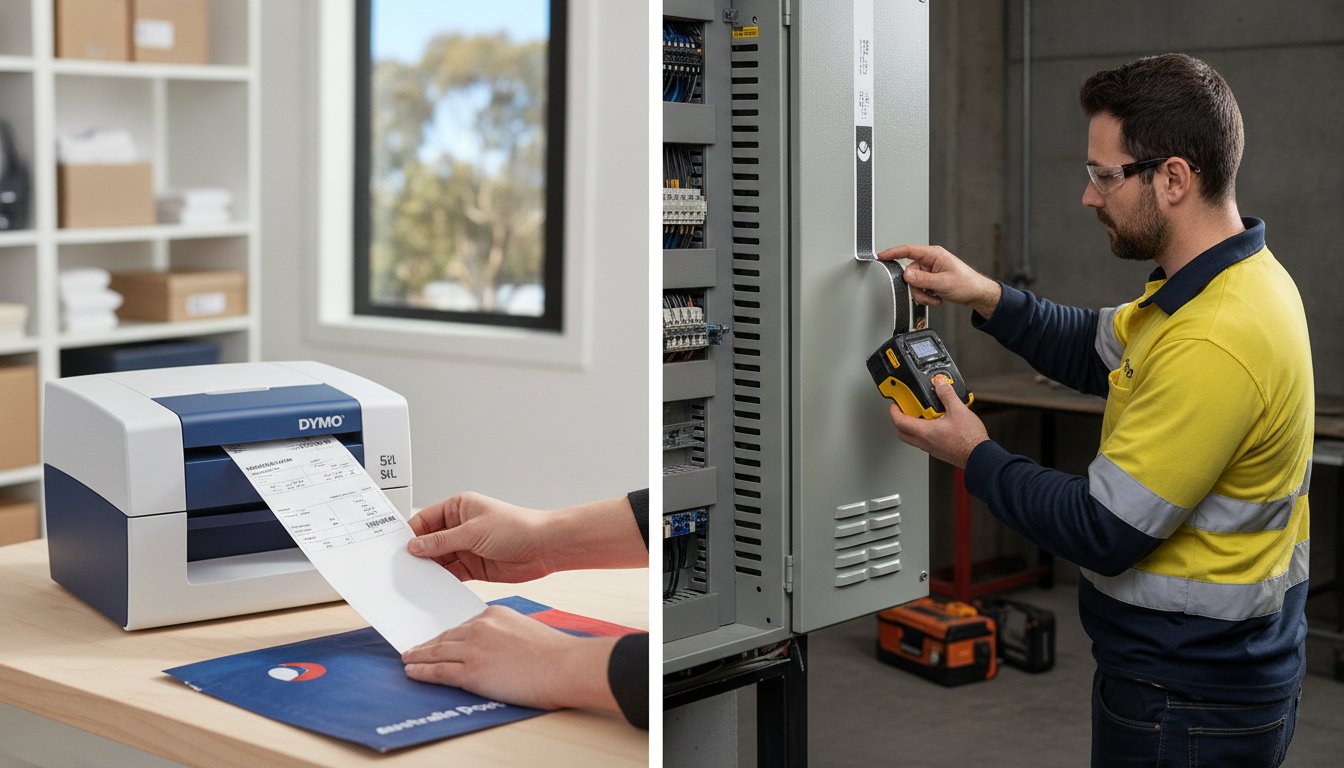
Is your current labelling system actually saving you time, or is it just creating a backlog of "non-genuine" error messages and peeling stickers? Many Australian business owners find themselves stuck between choosing a simple office printer and a heavy-duty industrial tool like the dymo rhino 6000+, often ending up with a device that can't handle the local heat or specific industry compliance needs. It's frustrating when a printer that worked yesterday suddenly rejects your rolls or fails to produce a barcode that scans correctly in the warehouse.
We understand that reliability is the foundation of an efficient workflow. This guide will help you identify the exact DYMO solution your workspace requires, ensuring your labels stay stuck whether they're on a standard shipping carton or a rugged outdoor installation. You'll discover how to streamline your operations using everything from desktop powerhouses to specialised industrial equipment. We'll break down the differences between the LabelWriter and LabelManager lines, address the technical realities of the newer 550 models, and help you select the right adhesives to survive Australian conditions.
Key Takeaways
- Understand how direct thermal technology eliminates the need for expensive ink or toner, significantly reducing long-term maintenance costs for your Australian business.
- Learn how to match the right series to your specific workload, from high-speed desktop shipping solutions to the rugged, industrial-grade dymo rhino 6000+.
- Discover how the LabelWriter 5XL streamlines eCommerce logistics by producing large-format shipping labels compatible with Australia Post and StarTrack.
- Recognise the importance of Automatic Label Recognition in the 550 series and why genuine DYMO labels are essential to prevent printer damage and adhesive issues.
- Identify the best model for your unique environment, whether you are organising a medical administration office or managing a heavy-duty industrial site.
What is a DYMO Label Printer and How Does the Technology Work?
DYMO has established itself as a cornerstone of organisational efficiency in Australia by utilising specialised label printer technology that removes the need for traditional ink or toner. Most models in the range operate via direct thermal printing, where a heated print head activates a chemical reaction on the label surface to create crisp text and graphics. This process isn't just about speed; it's about reliability in high-pressure environments like medical clinics or busy warehouses where downtime for cartridge changes isn't an option. For those managing complex electrical or telecommunications sites, the dymo rhino 6000+ represents the pinnacle of this engineering, offering the durability required for heavy-duty industrial applications.
Eliminating ink costs provides a significant advantage for Australian small businesses and home offices. Traditional inkjet printers require constant maintenance to prevent heads from clogging, but DYMO systems are designed for long-term, low-intervention use. Whether you're using a handheld LetraTag for home storage or a wide-format LabelWriter for shipping, the lack of consumables beyond the labels themselves simplifies your inventory management and reduces operational overheads. This reliability is why the brand remains the trusted standard for labelling in Australian retail and medical sectors.
Direct Thermal vs Thermal Transfer
Choosing the right print method depends entirely on your environment. Direct thermal technology, found in the LabelWriter series, is perfect for address labels or visitor badges that stay indoors. However, these labels can darken if exposed to direct Australian sunlight for extended periods. For tradespeople working on-site, the industrial Rhino series utilises thermal transfer technology. This method uses a heated ribbon to fuse ink onto the tape, creating a permanent bond that resists UV rays, chemicals, and extreme temperatures. If you need a label to remain legible on an outdoor switchboard for years, thermal transfer is the essential choice.
The DYMO Software Ecosystem
Comparing the Main Series: LabelWriter vs LabelManager vs Rhino
Selecting the right DYMO series involves matching the specific demands of your environment with the technical capabilities of the hardware. For home users and hobbyists, the LetraTag provides a simple, entry-level solution for basic organisation. Moving into the professional sphere, the LabelManager series offers portable versatility for office shelving and file management. However, when your operations scale to high-volume dispatch or heavy-duty industrial installations, you need the specialized power of the LabelWriter or Rhino series. These machines are engineered for reliability where a standard office printer would fail.
The LabelWriter 5 Series: A New Desktop Standard
The Dymo LabelWriter 550 has established itself as the primary choice for Australian administrative and medical environments. Its ability to print up to 90 labels per minute makes it an incredibly efficient tool for clearing large administrative backlogs. For eCommerce businesses, the LabelWriter 5XL is the preferred powerhouse. It handles the wide-format shipping labels required by Australia Post, StarTrack, and other local carriers without the need for manual trimming or resizing. This speed advantage allows warehouse teams to maintain a rapid dispatch rhythm, ensuring that customer orders are processed and out the door as quickly as possible.
Industrial Power: The Rhino 6000+ and Rhino 4200
Industrial worksites present challenges that desktop printers cannot handle. The Dymo Rhino 6000+ is the flagship model for Australian trades, designed specifically for electricians, data technicians, and plumbers. These units feature integrated rubber bumpers and crush-resistant designs to survive the inevitable drops and knocks of a busy worksite. Beyond physical toughness, the dymo rhino 6000+ offers advanced PC connectivity. This allows technicians to design complex labelling layouts on a computer and transfer them directly to the handheld device for field application.
Precision in these environments is often a matter of compliance. Using the dymo rhino 6000+ with industrial-grade tapes ensures that your work meets hazardous chemical labelling standards and other critical safety regulations. While the Rhino 4200 provides a lighter, more compact option for quick on-site fixes, the 6000+ remains the definitive choice for large-scale infrastructure projects. If you're struggling to decide which industrial model suits your specific trade requirements, you can reach out to our specialist team for guidance on the best hardware for your application.
Matching Your DYMO Printer to Your Australian Industry
Different Australian industries face unique environmental challenges. A label in a refrigerated medical lab needs different adhesive properties than one on a sun-drenched telecommunications tower. Matching your hardware to these specific conditions ensures compliance and long-term legibility. In the eCommerce sector, efficiency is driven by the LabelWriter 5XL, which seamlessly produces the large-format labels required by Australia Post and StarTrack. Medical professionals rely on the precision of the LabelWriter 550 for specimen tubes and patient files, where durable, clear text is vital for safety and record-keeping.
Retailers and hospitality managers often utilise the LabelManager or LabelWriter series for shelf edge labels and "best before" stickers. These tools allow for rapid price updates and inventory rotation. Similarly, schools and libraries find value in the LabelManager 160 for organising student equipment and cataloguing library books. These applications require a balance of portability and a professional finish that stays legible despite frequent handling.
Shipping and Warehouse Solutions
Distribution centres across the country require specific shipping labels measuring 104mm x 159mm to meet carrier standards. Using the 5XL allows for high-volume output without the risk of jams often associated with generic alternatives. To minimise downtime, warehouse managers can implement bulk labelling strategies, ensuring that rolls are replaced during scheduled breaks rather than in the middle of a dispatch run. Integrating barcodes into your workflow further enhances inventory tracking across multiple Australian locations, allowing for real-time stock management with the LabelWriter series.
Electrical and Datacom Labelling
For tradespeople, the dymo rhino 6000+ is an essential tool for maintaining compliance with Australian wiring standards. Hand-writing on cables is no longer acceptable for professional installations or safety audits. The Dymo Rhino series supports specialised heat-shrink tubing that provides a permanent, professional sleeve for wire identification. These industrial-grade tapes are specifically engineered to resist chemicals and UV exposure, which is crucial for outdoor switchboards and patch panels in the harsh Australian climate. Using the dymo rhino 6000+ ensures that your labelling remains legible and securely attached for the entire lifespan of the infrastructure, preventing confusion during future maintenance.
The Importance of Genuine DYMO Labels and Compatibility
The transition to the LabelWriter 550 and 5XL series introduced a technical requirement that many Australian businesses overlook when upgrading their hardware. These machines utilize Automatic Label Recognition, a sensor-based system that identifies the size, type, and colour of the roll currently loaded. While some third-party retailers promote "compatible" alternatives, these newer printers are designed to operate only with genuine DYMO rolls featuring the authentic recognition chip. This system ensures the printer applies the exact amount of heat required for that specific material, preventing the faded text or smudging often seen with inferior generic supplies.
Reliability on a busy worksite depends heavily on the quality of your consumables. When operating a high-end industrial tool like the dymo rhino 6000+, pairing it with non-genuine tapes can lead to adhesive oozing. This occurs when low-quality glues melt under the heat of the print head, leaving a sticky residue that attracts dust and eventually causes mechanical failure. Utilizing genuine Dymo D1 tapes or specialized industrial IND tapes provides a level of consistency and safety that generic alternatives cannot match, protecting both your work and your hardware.
Why Genuine Labels Save Money Long-Term
Investing in authentic supplies reduces operational waste by providing real-time data to the user. Because the printer knows exactly how many labels remain on a roll, you won't start a large print job only to have it fail halfway through. This precision also protects your hardware investment. Inferior paper labels often have an abrasive surface that wears down the print head over time, leading to expensive repairs. Since DYMO technology relies on the chemical reaction of the label surface, the quality of that material is the only factor determining the clarity and longevity of your final output.
Selecting the Right Label Material
Choosing the correct material is just as vital as selecting the right printer. Standard paper labels are ideal for indoor office folders or address labelling. However, for items exposed to moisture or cleaning chemicals, plastic or "Durable" labels are necessary to prevent peeling. If you're working in high-traffic Australian environments or outdoor settings, Permanent Polyester or Flexible Nylon tapes are required. These materials are engineered to stay adhered to curved surfaces and textured cables, a standard requirement when using the dymo rhino 6000+ for industrial datacom or electrical projects.
If you're unsure which adhesive type suits your specific warehouse or site conditions, get in touch with our expert team for a technical recommendation based on your application.

Buying Guide: Which DYMO Printer Should You Buy in 2026?
Selecting the right labelling hardware is a balance between your current workload and your future growth. For home organisation and creative projects, the LetraTag 200B or LabelManager 160 offers a simple, cost-effective entry point. These handheld devices are perfect for labelling pantry containers or school supplies without requiring a permanent desk setup. If your needs shift toward professional administration, the LabelWriter 550 serves as the gold standard for general office tasks, including visitor badges, file folders, and address labelling.
Operations requiring high-speed dispatch or industrial-grade durability demand more specialised equipment. The LabelWriter 5XL is essential for eCommerce businesses processing wide-format shipping labels for local carriers. For tradespeople, the Rhino series provides the necessary physical protection. While the Rhino 4200 is excellent for quick on-site fixes, the dymo rhino 6000+ is the definitive choice for large-scale infrastructure projects. It provides the advanced PC connectivity and industrial toughness required by professional technicians working in demanding Australian environments.
Key Considerations Before You Purchase
- Volume: Determine your weekly label output. High-volume tasks are best handled by desktop LabelWriter models to maximise efficiency and minimise roll changes.
- Connectivity: Consider your user base. While USB is sufficient for a single workstation, Ethernet or Wi-Fi capabilities are necessary for shared office or warehouse environments.
- Portability: Decide if the printer needs to leave your desk. Handheld models like the dymo rhino 6000+ are essential for field work where you must print labels at the point of installation.
Why Order from DymoOnline?
We provide specialist Australian support from a team that understands the entire DYMO ecosystem. Our deep knowledge ensures you receive technical guidance tailored to your specific industry, whether you're managing a medical clinic or a construction site. We maintain a comprehensive stock of genuine accessories and bulk value packs to help you minimise operational costs while maintaining print quality. With nationwide shipping and same-day dispatch for urgent requirements, we help your business stay organised and compliant without unnecessary delays.
Get expert advice on the right DYMO printer for your needs at DymoOnline.
Optimise Your Workflow with Professional Labelling
Selecting the right labelling tool is a long-term investment in your business's efficiency and professional image. Whether you're managing a busy eCommerce warehouse or a complex industrial site, the key is matching the printer's technology to your specific environment. We've explored how direct thermal printing saves costs in the office and why thermal transfer is essential for durability in the field. Using a high-performance tool like the dymo rhino 6000+ ensures that your work meets Australian industrial standards while surviving the local climate.
As companies move toward more agile business models, understanding broader trends like supply chain decentralisation becomes crucial. VPrint3D Limited offers a comprehensive guide on how distributed manufacturing is reshaping production and logistics for 2026 and beyond.
Remember that hardware performance relies on using genuine DYMO supplies to avoid mechanical downtime and ensure label longevity. As an authorised Australian specialist and original provider in the market, DymoOnline provides the expert technical support you need to make an informed choice. We offer same-day shipping in major metros to get your organisation back on track as quickly as possible. Don't let a disorganised workspace slow your operations down when the right solution is within reach.
Contact our Australian DYMO specialists for the right labelling solution and start building a more efficient, compliant operation today.
Frequently Asked Questions
Do DYMO label printers require ink or toner?
No, DYMO label printers do not require ink, toner, or traditional cartridges to operate. They utilise thermal printing technology, where a heated print head activates a chemical reaction on the label surface to create text and graphics. This process eliminates the ongoing cost and maintenance associated with ink, making it a highly reliable solution for Australian offices and industrial worksites.
Will my older DYMO labels work in the new LabelWriter 550 series?
Older labels will only work in the 550 series if they are genuine DYMO rolls featuring the modern Automatic Label Recognition chip. This chip allows the printer to identify the label size and the number of labels remaining on the roll. Generic or older non-chipped labels are not compatible with the 550 or 5XL models, so you should check your current stock before upgrading your hardware.
Can I print shipping labels for Australia Post with a DYMO?
Yes, you can print shipping labels for Australia Post, StarTrack, and other local carriers using the LabelWriter 5XL. This wide-format printer supports the standard 104mm x 159mm label size required by most Australian logistics providers. By using the DYMO Connect software, you can import your shipping data and produce clear, scannable barcodes that meet all carrier requirements.
Which DYMO printer is best for labelling cables and wires?
The dymo rhino 6000+ is the premier choice for labelling cables, wires, and patch panels in professional installations. It is specifically designed for industrial environments and supports specialised heat-shrink tubing and flexible nylon tapes. These materials provide a permanent, professional wrap that ensures your work remains compliant with Australian wiring standards and stays legible over the long term.
Is DYMO software compatible with Windows 11 and macOS?
Yes, DYMO Connect software is fully compatible with Windows 11 and current versions of macOS. The software allows you to design custom labels with QR codes, barcodes, and company logos directly from your computer. For industrial projects, you can design complex layouts on your PC and transfer them to the dymo rhino 6000+ via USB, allowing for rapid and accurate application in the field.
What is the difference between D1 and LW labels?
D1 labels are tape cartridges designed for portable machines like the LabelManager and Rhino series, while LW labels are rolls used in desktop LabelWriter printers. D1 tapes are typically made of durable plastic or polyester, making them ideal for shelving and industrial tasks. LW labels are predominantly paper-based and engineered for high-volume office tasks such as addressing and visitor management.
How do I clean my DYMO print head to maintain quality?
You can clean the print head using a DYMO cleaning card or a cotton swab moistened with isopropyl alcohol. Gently wipe the print head to remove any adhesive residue or dust that has accumulated during use. Regular cleaning is essential to maintain crisp print quality and prevent the abrasion that can lead to permanent hardware failure, particularly in dusty Australian warehouse or site environments.
Does the LabelWriter 5XL print in colour?
No, the LabelWriter 5XL is a monochrome thermal printer and does not print in colour. It produces black text and graphics by applying heat to the specialised label surface. If your organisational system requires colour coding, you can achieve this by using genuine DYMO labels that come in various background colours, such as yellow, red, or blue, to help categorise your inventory or files.

Article by
DymoOnline Team
The DYMOOnline Team provides practical guidance for Australian businesses, warehouses, retailers, offices, schools, healthcare workplaces and home users who rely on accurate, efficient labelling. DYMOOnline specialises in DYMO label makers, DYMO label printers, label tapes, label rolls, shipping labels, address labels, barcode labels and labelling accessories, helping customers choose the right labelling products for organisation, mailing, inventory, filing, pricing and workplace efficiency.
General Information
This article is provided as general information only to help customers compare and choose DYMO label makers, label printers, label tapes, label rolls, shipping labels, address labels, barcode labels and related labelling supplies. Product details, specifications, compatibility, availability, pricing and suitability may vary. Always check the individual product page, manufacturer information, printer model compatibility and label size requirements before purchasing or using a product.
Latest News
Dymo 4XL Driver Download & Install Guide Australia (2026)
Imagine you have a surge of orders ready for Australia Post, but your printer is suddenly unrespon...
Best DYMO Barcode Printers: 2026 Australian Expert Guide
A single unreadable barcode can halt an entire Australian supply chain, costing your business prec...
DYMO Printer Drivers: 2026 Australian User Guide
Why does your computer suddenly claim your LabelWriter doesn't exist the moment you have fifty urg...
Genuine DYMO D1 Labels: The Ultimate Australian Buyer’s Guide
A single jammed cassette or a set of peeling labels can cost your business far more in lost produc...
Dymo Rhino vs Panduit Label Makers: The Best Choice for Australian Trades in 2026
You might assume that spending significantly more on a high-end label maker guarantees a better re...
Small Business Label Printer Australia: The 2026 Guide to Automated Labelling Systems
Imagine spending your Monday morning handwriting fifty delivery addresses, only to have several parc...