
Everything You Need to Know About DYMO D1 Labels: The Australian Guide
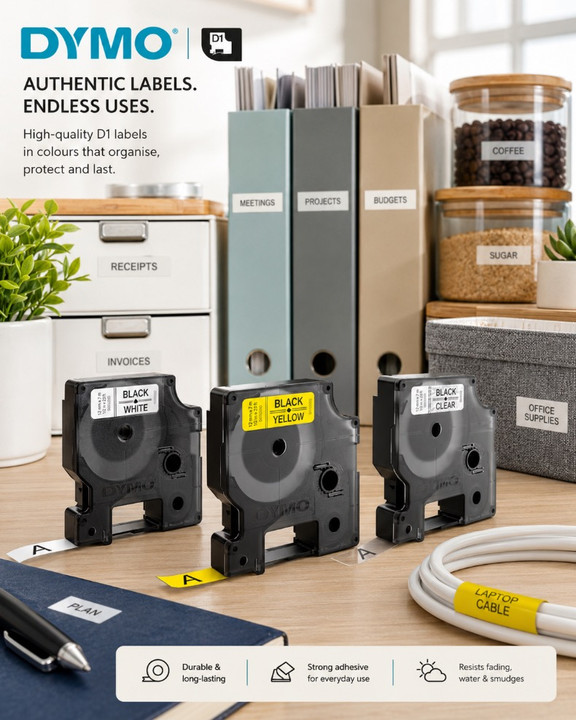
Most Australian business owners don't realise that a single hot afternoon in an Australian storage or logistics facility can be the undoing of months of organisational work if the wrong adhesive is used. Selecting the correct dymo d1 labels is about more than just picking a colour; it's about matching technical specifications to your specific environment and surface requirements. It's a common frustration to invest hours into a labelling project only to find the tape peeling or to discover you've purchased a 19mm width that doesn't fit your handheld LabelManager.
At DymoOnline, we know that professional clarity starts with the right supplies. This guide will eliminate the guesswork by detailing technical specifications, compatibility across the LabelManager range, and how to choose the right width for your application. You'll learn the practical differences between D1 and other tape types, ensuring you have the confidence to maintain your printer and streamline your next project with precision. We'll also cover essential Australian regulations like PEAL and WEL to ensure your workplace remains compliant and efficient.
Key Takeaways
- Identify which specific LabelManager and LabelWriter Duo models are compatible with dymo d1 labels to ensure seamless hardware performance.
- Understand the technical differences between standard and durable materials to select the correct adhesive for your specific environmental conditions.
- Learn how to apply professional labelling to meet Australian workplace standards, including food allergen (PEAL) and chemical safety (WEL) regulations.
- Discover why choosing genuine DYMO supplies prevents adhesive leakage and protects the longevity of your printer's thermal print head.
- Gain confidence in selecting the right tape widths and colours to improve organisational efficiency across office, retail, and industrial settings.
What are DYMO D1 Labels? The Standard for Professional Labelling
DYMO D1 labels serve as the primary consumable for the popular LabelManager series and several other specialised printers. Understanding the history of the DYMO Corporation reveals a long-standing commitment to industrial-grade reliability. These tapes were engineered to replace messy, unreliable adhesive methods with a clean, all-in-one system. Unlike standard paper stickers that peel and yellow over time, these are built for longevity in demanding Australian environments.
To see how these tapes perform in a practical setting, watch this helpful video review:
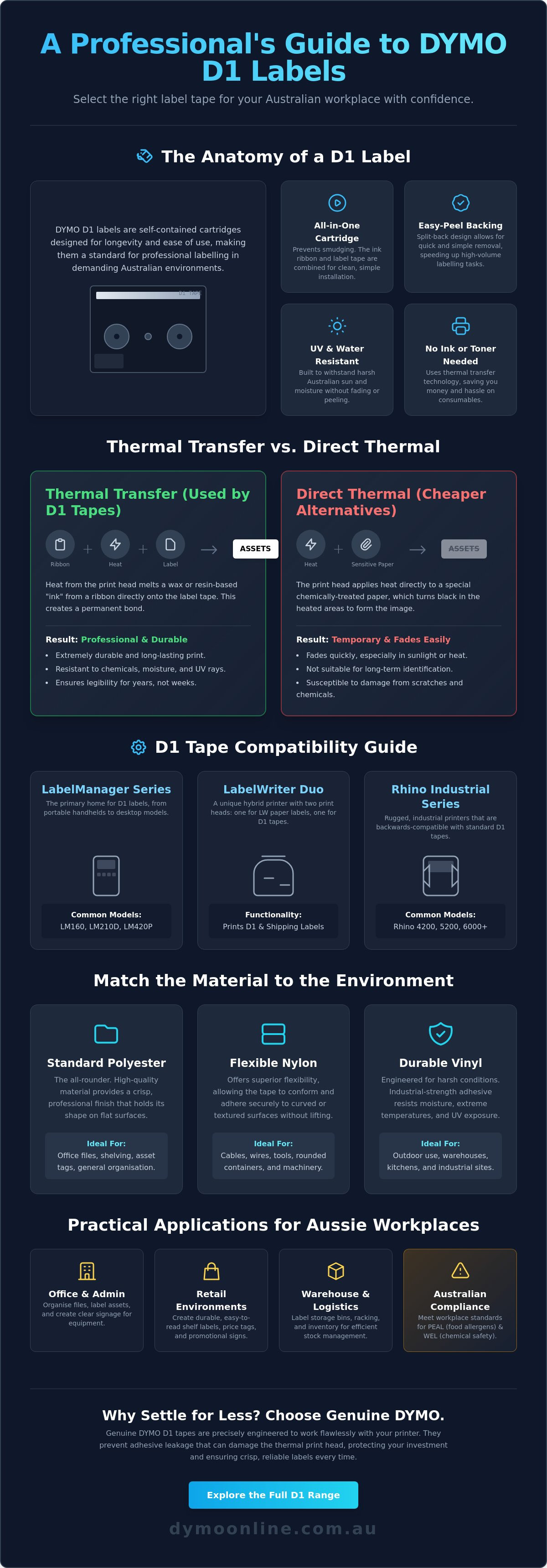
The core advantage of dymo d1 labels lies in their thermal transfer technology. This process ensures that you never need to purchase ink or toner. Because the text is literally melted onto the tape material, the finished product is water-resistant and highly resistant to UV exposure. This is particularly important for local businesses where labels might face harsh sunlight through a storefront window or moisture in a commercial refrigerator. The "Easy Peel" split-back design is a subtle but vital feature; it allows users to remove the backing quickly without fumbling or damaging the adhesive, which is essential for high-volume tasks.
The Anatomy of a D1 Label Tape
Each D1 cassette is a self-contained unit where the ink ribbon and the label tape interact perfectly. This all-in-one cartridge design is superior because it prevents smudging during installation; you never actually touch the "ink" source. Most standard D1 tapes are constructed from high-quality polyester. This material provides a crisp finish that holds its shape. For more specialised tasks, some variants use nylon, which offers the flexibility needed to wrap around curved surfaces like cables or rounded containers without lifting at the edges.
Thermal Transfer vs. Direct Thermal Printing
It's vital to distinguish between the technology used in D1 tapes and cheaper alternatives. Thermal transfer is a process where heat melts a ribbon onto the tape for permanent bonding. This creates a label that can withstand cleaning chemicals and won't fade when exposed to the sun. In contrast, direct thermal printing uses heat-sensitive paper that eventually turns black or fades into nothing. By choosing dymo d1 labels, you're opting for a professional-grade solution that ensures your organisational work remains legible for years, rather than just weeks.
Compatibility Guide: Which DYMO Machines Use D1 Tapes?
Identifying the right hardware for your task is the first step in successful labelling. While the D1 format is versatile, your specific machine dictates the tape width and material options available. The primary home for dymo d1 labels is the LabelManager series. This includes portable entry-level units like the LM160, mid-range desktop models like the LM210D, and high-performance devices like the LM420P. Each machine is designed for a specific volume of work. The LM160 is ideal for occasional file labelling, whereas the LM420P is built for heavy-duty office organisation.
One of the most misunderstood machines in the current lineup is the LabelWriter Duo. This hybrid device is unique because it features two separate print heads. One side handles standard LabelWriter (LW) paper labels for shipping or addresses. The other side is specifically designed for D1 cassettes. It's a powerful tool for Australian businesses that need to switch between high-speed mailing and durable equipment labelling without owning two separate printers.
There is also significant crossover with the Rhino industrial range. While Rhino machines like the 4200, 5200, and 6000+ typically use specialised IND tapes, they're backwards compatible with standard dymo d1 labels. This allows tradespeople to use their rugged industrial tools for basic office tasks without needing a second machine. If you're unsure which cassette fits your specific device, you can always contact our specialist team for technical advice.
Matching Machine to Tape Width
Tape widths range from 6mm to 24mm. However, hardware limitations apply. Smaller handhelds like the LM160 are restricted to 6mm, 9mm, and 12mm tapes. Desktop machines like the LM210D expand your options up to 19mm, while professional models like the LM420P can handle the full 24mm width. You should browse the DYMO LabelManager range to find your specific model and its supported widths before purchasing your next batch of supplies.
Legacy Machine Support
The D1 format has remained the industry standard for over a decade. This consistency means modern cassettes still support older LabelPoint and Pocket models that many Australian offices still rely on today. If the identifying sticker on your machine has worn off, look at the tape slot. Most legacy machines that use a top-loading or side-loading cassette with a clear plastic window are D1 compatible. This continuity ensures your hardware investment remains useful even as tape technology evolves, preventing the need for frequent equipment upgrades.
Understanding D1 Tape Materials: From Standard to Durable
Selecting the right material for your dymo d1 labels is just as important as choosing the correct width. While the standard polyester tape is the versatile workhorse for most Australian offices, specific environments require specialised adhesives and backing materials. Standard D1 tapes are the go-to choice for categorising indoor office files, storage bins, and stationery cupboards. They provide a clean, professional look that resists water and UV light, ensuring text remains legible even when placed near sunny windows.
For more demanding conditions, durable D1 tapes offer a significant technical upgrade. These are engineered with a stronger adhesive and more robust material to withstand textured surfaces and harsher environments. Beyond these, you'll find flexible nylon tapes. These are specifically designed for curved surfaces; their unique pliability allows them to wrap around cables and rounded containers without the "flagging" or peeling often seen with stiffer materials. If your project involves flat, smooth surfaces where the label must never move, permanent polyester variants provide an industrial-strength bond that is difficult to remove once cured.
Standard vs. Durable D1: Which Do You Need?
The primary difference between these two categories lies in their adhesive chemistry and material thickness. Standard tapes are designed for easy removal if you need to relabel a folder, whereas durable versions are meant to stay put. One critical factor for local users is how these tapes handle the Australian summer heat. Standard D1 labels are typically rated to withstand temperatures up to 90°C, which prevents them from curling in hot vehicles or non-air-conditioned warehouses. However, for equipment that generates its own heat or for outdoor assets, you should view our DYMO D1 Durable labels. These feature an industrial-grade adhesive that maintains its integrity on challenging surfaces like powder-coated metal or heavy plastics.
Colour and Size Combinations
The visual impact of your labelling often depends on the colour contrast. Black on White is the most common choice for general administrative tasks, while White on Clear is preferred for a "printed on" look on glass or premium storage jars. For safety and organisational hierarchy, Black on Yellow is the industry standard for safety and warning notices. We also see high demand for fluorescent and metallic options in Australian workplaces; these specialty tapes are essential for high-visibility safety markers or asset tracking in dimly lit storage areas. By matching the right colourway to your specific application, you can improve workplace safety and find items faster.
Practical Applications for D1 Labels in Australian Workplaces
Practicality is the hallmark of professional organisation. In Australian workplaces, the versatility of dymo d1 labels makes them indispensable for everything from front-of-house retail to back-end logistics. For office environments, colour-coding files and stationery cupboards creates a visual system that reduces search time for staff. In the hospitality sector, these labels are essential for food safety compliance; specifically for marking "Use By" dates on pantry stock and organising commercial refrigerators where temperature resistance is a priority. This ensures businesses meet local health regulations while minimising stock wastage.
Education and asset management represent two more high-value applications. Schools utilise these tapes to manage resource centres and personalise student equipment, while businesses use permanent polyester tapes to track IT hardware and electrical tools. This is particularly relevant for companies maintaining "test and tag" logs. A durable, legible label on a power lead or drill can prevent safety oversights and ensure that equipment remains accounted for during site audits. The ability to produce these on-demand saves time and maintains a consistent professional standard across all company assets.
Organising the Modern Australian Home Office
With more Australians working remotely, the home office has become a focus for efficiency. Labelling power adapters and cables behind the desk prevents the common frustration of unplugging the wrong device during a meeting. To learn more about using these tools effectively in a portable setting, check out The Complete Guide to the DYMO LabelManager 160. Beyond cable management, these tapes are perfect for categorising tax records and archival boxes. This ensures that financial documentation is easily retrieved during audit periods or tax time, keeping your workspace clutter-free and highly functional.
Industrial and Warehouse Utility
In non-climate-controlled spaces like Australian warehouses, label durability is tested by dust and humidity. Using 24mm dymo d1 labels provides the high visibility required for identifying large-scale metal racking and plastic totes. These wider tapes allow for larger font sizes, making them readable from a distance in busy aisles. Additionally, creating clear safety signage for first aid kits and fire extinguishers ensures that emergency equipment is always identifiable. If you need assistance selecting the right tape width for your industrial environment, contact our specialist team today for expert guidance on matching hardware to your specific application.
Why Genuine DYMO D1 Tapes Outperform Generic Alternatives
While the upfront cost of generic tapes might seem attractive, the long-term technical risks often outweigh the initial savings. Genuine dymo d1 labels are manufactured to precise tolerances that ensure the adhesive remains stable even under the stress of the thermal printing process. Non-genuine alternatives frequently use lower-grade adhesives that can "ooze" from the sides of the tape. This residue accumulates on the internal rollers and the cutter blade, leading to frequent jams and poor print quality that requires manual intervention. Over time, this buildup can cause permanent damage to the mechanical components of your LabelManager.
The thermal transfer ribbon in a genuine cassette is specifically engineered to protect the delicate print head. Abrasive materials found in generic ribbons can cause premature wear, leading to "dead pixels" or white lines across your labels. Choosing original supplies ensures your machine maintains its performance for its entire service life. Additionally, DYMO maintains strict colour consistency across its manufacturing plants. This means the "Yellow" tape you buy today will match the labels you printed two years ago, maintaining a uniform professional appearance across your warehouse or office. DYMO also maintains a commitment to sustainable manufacturing, using recycled materials in many of its cassettes to reduce environmental impact.
Protecting Your Printer Investment
It's a common misconception that all tapes are equal. In reality, using non-genuine supplies can void your manufacturer's warranty with Mega Thing Pty Ltd. If an inferior tape leaks adhesive into the mechanism, the subsequent repair costs often exceed the price of several years' worth of original cassettes. A simple cost-benefit analysis shows that the reliability of genuine supplies prevents the downtime associated with printer failure. For businesses looking to manage costs without risking their hardware, you can contact our Australian team for bulk pricing on genuine tapes. This provides the peace of mind of authenticity while remaining budget-conscious.
Maintenance Tips for D1 Label Makers
Regular maintenance extends the life of your device and ensures your dymo d1 labels look their best. We recommend cleaning the print head every time you replace a cassette. Use a specialised cleaning swab or a lint-free cloth dampened with a small amount of isopropyl alcohol to gently wipe the print head and the rubber roller. This removes any microscopic dust or adhesive fragments. To prevent the thermal ribbon from degrading or becoming brittle, store your spare cassettes in a cool, dry place away from direct sunlight. When it's time to update your organisation, most D1 labels can be removed without leaving residue. If a small amount of adhesive remains on a delicate surface, a dab of citrus-based cleaner will safely clear the area without damaging the substrate.
Streamline Your Australian Workplace with Professional Labelling
Selecting the right dymo d1 labels is a technical decision that impacts both the professional image and the operational efficiency of your business. By matching the specific tape chemistry to your environment, whether it's a temperature-controlled office or a rugged warehouse, you ensure that your organisational work survives the Australian climate. Protecting your hardware with genuine supplies is the most effective way to avoid unnecessary maintenance costs and maintain print head longevity for years to come.
As a specialist Australian supplier since 2009, we provide the deep expertise needed to help you choose the correct consumables for your specific DYMO model. We offer nationwide shipping with same-day metropolitan delivery to keep your projects moving without delay. You can also rely on expert support from Mega Thing Pty Ltd for any technical requirements regarding your labelling hardware.
If you're ready to upgrade your organisational systems or need clarification on tape widths and materials, contact our specialist team for expert advice on DYMO D1 labels. We look forward to helping you achieve a more organised and compliant workplace.
Frequently Asked Questions
Will DYMO D1 labels work in my LetraTag machine?
No, DYMO D1 labels are not compatible with LetraTag machines. LetraTag devices use a different cassette format specifically designed for home and hobby use. If you own a LetraTag, you must use the specialised LetraTag plastic or paper tapes to ensure the machine functions correctly. Using the wrong cassette type can damage the internal feed mechanism of your device.
Are DYMO D1 labels waterproof and suitable for outdoor use?
Yes, D1 labels are water-resistant and designed to withstand UV light, heat, and freezing conditions. This makes them suitable for many outdoor applications in Australia, such as labelling garden equipment or external storage bins. For extreme industrial environments or textured outdoor surfaces, we recommend using the Durable D1 variant for a stronger bond that resists peeling in harsh sunlight.
What is the difference between D1 and IND (Industrial) tapes?
The primary difference lies in the adhesive strength and material flexibility. D1 tapes are the standard for office and general organisational tasks in the LabelManager range. IND (Industrial) tapes, typically used in Rhino machines, include specialised materials like heat shrink tubing or flexible nylon with much more aggressive adhesives. While Rhino machines can use D1 tapes, standard LabelManagers cannot usually accept IND cassettes.
Can I use D1 labels in a LabelWriter 550 printer?
No, you cannot use D1 labels in a standard LabelWriter 550 printer. The 550 series is designed exclusively for die-cut paper label rolls. However, the LabelWriter 550 Duo is a hybrid model that features a dedicated second slot specifically for D1 cassettes. This allows you to print both shipping labels and durable dymo d1 labels from a single desktop unit.
How do I stop my D1 labels from peeling off after application?
To prevent peeling, ensure the application surface is clean and free from oil or dust using isopropyl alcohol. If you are applying dymo d1 labels to a textured or curved surface, the standard polyester tape may lift at the edges. In these instances, switching to a flexible nylon or durable D1 tape will provide the extra grip needed for a permanent, professional finish.
What is the longest length of tape available in a D1 cassette?
The standard length for most dymo d1 labels is 7 metres per cassette. This provides a high volume of labels for typical office or retail projects before a replacement is required. Some specialised variants, such as certain Durable or metallic tapes, may feature shorter lengths due to the thickness of the material. It's always worth checking the specific cassette length before starting a large-scale project.
Why is my D1 label maker saying "Tape Jam" even when it looks clear?
A "Tape Jam" error is often caused by adhesive residue buildup on the internal rollers or the cutter blade rather than a physical obstruction. This commonly happens when using generic tapes that leak adhesive under the heat of the print head. To fix this, clean the rollers with a cleaning swab or isopropyl alcohol to remove any sticky fragments that are preventing the tape from feeding correctly.
Are there BPA-free options available for DYMO D1 labels?
Yes, all genuine DYMO D1 labels are BPA-free. This makes them safe for use in various sensitive environments, including schools, hospitality, and medical administration offices. By choosing genuine cassettes, you ensure that your labelling projects comply with modern safety standards while maintaining the high print quality and durability required for professional documentation and long-term asset tracking.
General Information
This article is provided as general information only to help customers compare and choose DYMO label makers, label printers, label tapes, label rolls, shipping labels, address labels, barcode labels and related labelling supplies. Product details, specifications, compatibility, availability, pricing and suitability may vary. Always check the individual product page, manufacturer information, printer model compatibility and label size requirements before purchasing or using a product.
Latest News
How to Clean a DYMO Print Head: Maintenance Guide
Imagine you're preparing a batch of urgent shipping labels for an afternoon pickup, only to find eac...
DYMO Labels: A Complete Guide to Selecting the Optimal Labelling Solution
Last Wednesday, an operations manager discovered that hundreds of shipping labels had lost their gri...
Dymo 4XL Driver Download & Install Guide Australia (2026)
We agree that navigating the choice between DYMO Connect and the legacy Label Software feels unnec...
Best DYMO Barcode Printers: 2026 Australian Expert Guide
A single unreadable barcode can halt an entire Australian supply chain, costing your business prec...
DYMO Printer Drivers: 2026 Australian User Guide
Why does your computer suddenly claim your LabelWriter doesn't exist the moment you have fifty urg...
Genuine DYMO D1 Labels: The Ultimate Australian Buyer’s Guide
A single jammed cassette or a set of peeling labels can cost your business far more in lost produc...