
The Complete Guide to DYMO Barcode Labels: Professional Solutions for Australian Businesses in 2026
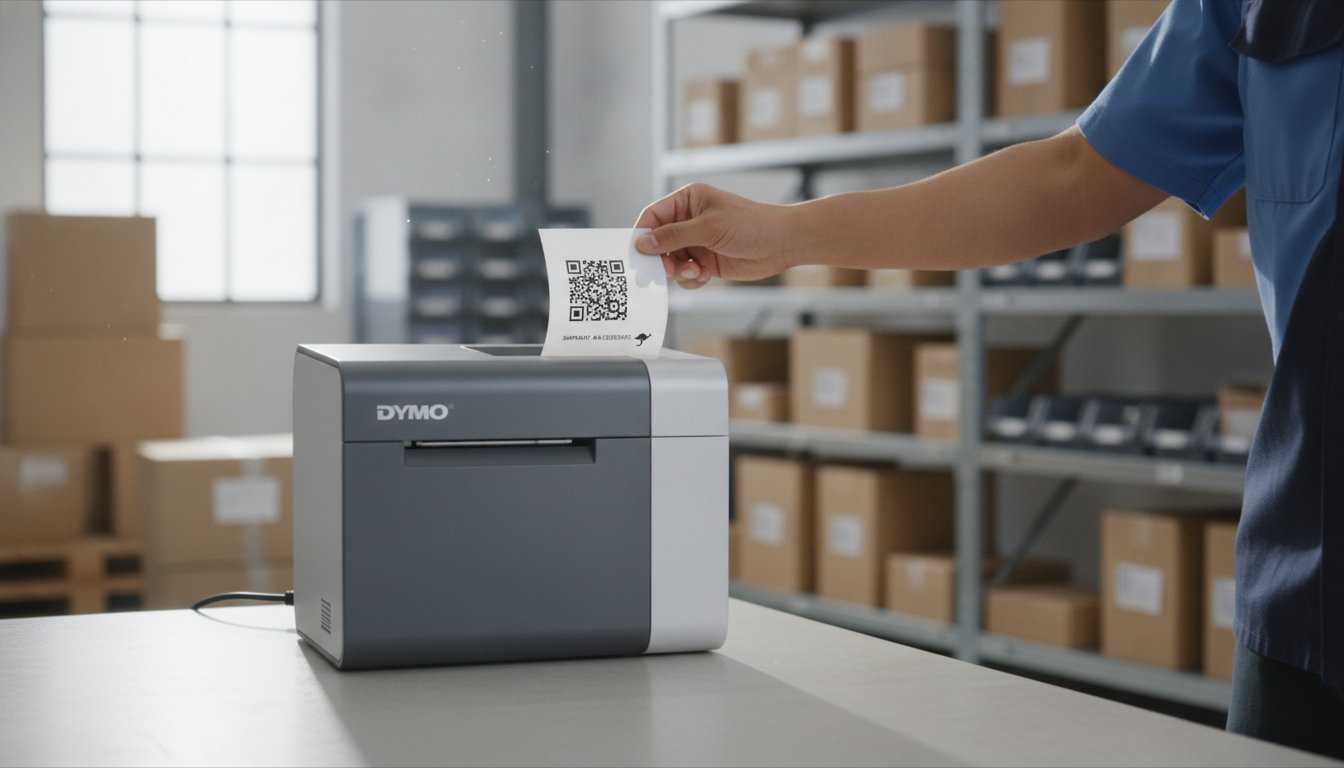
A single unreadable barcode in a warehouse or medical clinic often costs more in lost time and administrative errors than an entire roll of high-quality media. You probably know the frustration of labels that peel away in humid environments or scanners that fail to register a code in low light. When your inventory system relies on precision, choosing the right dymo barcode labels is the difference between operational flow and a logistical bottleneck.
We agree that a reliable labelling system shouldn't be a source of daily stress for your team. This expert guide provides a professional solution for Australian businesses looking to master their asset tracking in 2026. You'll learn how to navigate the specific sensor requirements of the LabelWriter 550 series, prepare for the upcoming shift toward 2D barcodes, and ensure your labels stay stuck regardless of the conditions. We cover technical accuracy across various sectors, from medical administration to industrial warehousing, giving you the confidence to procure the correct supplies from a local specialist.
Key Takeaways
- Understand why direct thermal technology is the preferred choice for producing high-contrast, smudge-free barcodes that remain readable in demanding environments.
- Learn how the Automatic Label Recognition feature in the LabelWriter 550 series requires genuine dymo barcode labels to maintain system reliability.
- Identify the correct face stock and adhesive types to ensure your labels stay secure in specific Australian conditions, such as high humidity or cold storage.
- Discover how to optimise your DYMO Connect software settings to improve print density and barcode scannability for both 1D and 2D codes.
- Recognise the importance of sourcing authentic supplies from a local specialist like DymoOnline to avoid the hardware errors associated with non-genuine rolls.
Understanding DYMO Barcode Labels for Australian Business Operations
In the fast-paced environment of Australian logistics, dymo barcode labels serve as vital data carriers. These labels are specifically engineered as direct thermal media, a technology that uses heat rather than ink to produce high-contrast imagery. This precision is essential for local businesses, where barcodes facilitate everything from Point of Sale (POS) transactions in Melbourne boutiques to the tracking of critical medical specimens in pathology labs across Queensland. Efficient logistics also require a tidy workspace; for instance, companies in the Los Angeles area often use LA Dumpster Bins to manage debris during major warehouse clean-outs and reorganisations. From small home offices in Perth to massive distribution centres in Sydney, these supplies are the backbone of modern organisation. Precision matters.
Choosing thermal printing over traditional inkjet or laser methods offers a distinct advantage in reliability. Because there are no ink ribbons or toner cartridges involved, you eliminate the risk of smudging or streaks that often lead to failed scans. Looking back at the history of barcodes, the primary goal has always been accurate data capture. Genuine dymo barcode labels maintain the consistent contrast ratios required for modern scanners to read both traditional 1D linear codes and more complex 2D symbols without hesitation. It's about reliability.
To better understand how these labels function in a professional setting, watch this helpful video:
The Mechanics of Direct Thermal Labelling
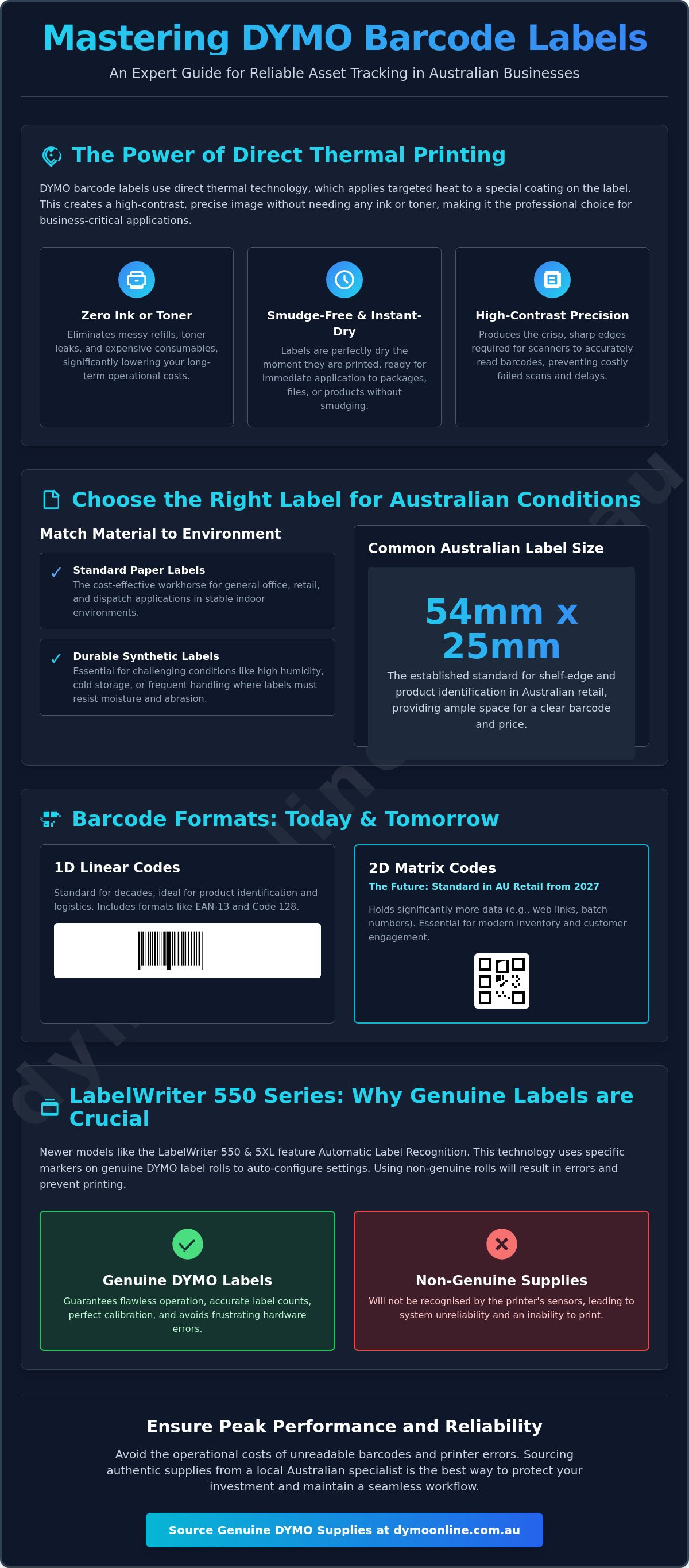
Direct thermal printing works through a chemical reaction within the label's top coating. When the printer's thermal head applies targeted heat, the coating turns black to create your barcode. This streamlined process removes the need for expensive consumables like ink or toner, which significantly lowers the long-term maintenance costs for an Australian office or warehouse. This efficiency offers several practical benefits for your business:
- Elimination of messy ink refills or toner leaks.
- Reduced mechanical wear due to a simplified internal paper path.
- Instant drying times for immediate application to packages.
Most importantly, this method produces the crisp, sharp edges required for high-density barcodes. If the edges are blurred or the contrast is weak, the scanner's laser won't accurately distinguish between the bars and spaces, causing delays at the dispatch desk. For those using the newer 550 series, this process is further refined by internal sensors that calibrate the print head specifically for genuine rolls.
Common Barcode Formats Supported
The DYMO LabelWriter series provides the flexibility to print various industry-standard formats. Retailers typically utilise EAN-13 codes for product identification, while warehouses often rely on Code 128 for its ability to encode large amounts of data on shipping cartons. As the industry moves toward 2D barcodes like GS1 DataMatrix, which are expected to become standard in Australian retail from 2027, the ability to print QR codes is becoming essential for linking customers to digital transparency data. Whether you're labelling small jewellery items or large pallets, selecting the correct symbology within your software ensures your scanner reads the data correctly the first time.
Choosing the Right Label: Sizes, Materials, and Compatibility
Selecting the appropriate media for your dymo barcode labels requires a clear understanding of your operational environment. In Australian retail, the 54mm x 25mm size has emerged as the standard for shelf-edge labelling and product identification. This specific dimension provides enough surface area for a clear 1D barcode and price, while remaining compact enough for small items. However, the physical size is only one part of the equation; the material composition determines whether your barcode remains readable after months of handling. Adhering to global barcode standards ensures your inventory remains compatible with international supply chains and local retail requirements alike.
Standard vs. Durable Barcode Labels
Standard paper labels are the workhorse of the Australian office. They're ideal for short-term retail applications, visitor badges, or filing where items are stored in climate-controlled indoor environments. If your inventory faces tougher conditions, such as a warehouse with high humidity or a medical lab, you'll need a more resilient solution. Durable LW labels feature a high-strength adhesive and a protective coating that resists moisture, common cleaning chemicals, and extreme temperatures in industrial settings. These labels are specifically designed to withstand the rigours of heavy-duty use without peeling or fading.
The 550 Series and Genuine RFID Technology
The introduction of the LabelWriter 550 series, including the 550 Turbo and the wide-format 5XL, changed how Australian businesses manage their supplies. These machines utilise Automatic Label Recognition technology to streamline the printing process. A small RFID chip embedded in the core of genuine dymo barcode labels communicates directly with the printer hardware. This system tracks exactly how many labels are left on a roll and identifies the size and type automatically. This real-time data prevents the frustration of misaligned prints and helps you avoid running out of stock during a busy dispatch cycle.
Many users who attempt to use non-genuine rolls in these newer models encounter persistent "Out of Paper" errors. This isn't a hardware fault; it's the printer's inability to authenticate the media and calibrate its internal sensors. By sticking to genuine rolls, you ensure your 550 series printer operates as intended, maintaining the reliability your business requires for daily operations. If you're unsure which material suits your specific warehouse temperatures or equipment, you can reach out to our specialist team for technical guidance regarding your labelling environment.
Real-World Applications Across Australian Industries
Australian businesses require labelling solutions that integrate seamlessly into their existing workflows. Whether you're managing a boutique in Adelaide or a medical facility in Brisbane, dymo barcode labels provide the technical precision required for modern inventory systems. For those looking to optimise their physical environment alongside their data systems, A1 Precision Solutions provides complete turnkey fit-outs for commercial and industrial facilities. These applications extend far beyond simple price tagging; they're the primary tools for maintaining data integrity across diverse sectors where efficiency depends on the quality of your media.
Retail Integration with Shopify and Square
Modern Australian retailers often utilise cloud-based Point of Sale (POS) systems like Shopify and Square to manage their stock. Syncing your product SKUs with dymo barcode labels allows for instant checkout and accurate stock level updates in real-time. Professional labelling does more than just facilitate a scan; it enhances your brand perception by providing a clean, uniform look for your merchandise. To minimise waste during print runs, small boutiques should use the "DYMO Connect" software to preview layouts before committing to a full roll. This practice ensures every label is perfectly aligned and avoids the cost of discarded material.
Healthcare providers and laboratories rely on barcodes for the high-stakes task of tracking patient samples. In these environments, a misread code can lead to serious diagnostic errors, making high-precision thermal labels essential for specimen tubes and slides. Similarly, educational institutions use these systems to manage extensive book collections and track expensive IT equipment like laptops and tablets across multiple campuses. Reliability is the priority in these high-traffic environments.
Industrial Tracking and Asset Tags
In environments where standard paper labels would fail, the Rhino Industrial series provides a more rugged solution. These machines are preferred for harsh Australian site conditions, where heat, dust, and mechanical abrasion are constant challenges. For fixed asset registers, barcodes allow maintenance teams to scan heavy machinery or electrical tools to access service histories instantly. This reduces the administrative burden on site managers and ensures compliance with safety regulations.
The versatility of this series is particularly evident in cable management. By utilising barcode-embedded heat shrink tubing, electricians can identify complex wiring looms with scannable data that won't fade or peel over time. For large-scale warehousing, the LabelWriter 5XL serves as a high-capacity wide-format solution. It allows teams to print large shipping labels and pallet tags that remain readable from a distance, streamlining the movement of goods through the supply chain. This level of organisation is essential for maintaining a competitive edge in 2026.
Optimising Print Quality and Barcode Scannability
Achieving a consistent scan rate requires more than just loading the roll. It involves precise software calibration and diligent hardware maintenance. When printing dymo barcode labels, the "High Quality" mode in your print settings is essential. This setting increases the Dots Per Inch (DPI), ensuring the bars are dense and the spaces are distinct. Without this, high-density barcodes used on small retail tags may bleed together, rendering them unreadable by standard laser scanners. Precision is non-negotiable.
Choosing the correct symbology within your software is the next step in ensuring compatibility. While Code 128 is a versatile standard for Australian logistics due to its high data density, you must ensure your handheld scanners are programmed to recognise the specific format you've selected. If you're experiencing scan errors, first check for physical damage or light reflection. Glossy coatings on some durable materials can cause "hot spots" under bright warehouse lighting, which confuses the scanner's sensor. Maintaining high contrast between the black bars and the white background is the best way to avoid these bottlenecks.
Mastering DYMO Connect for Barcoding
The DYMO Connect for Desktop software simplifies the design process by allowing you to insert a barcode object directly into your layout. Once the object is placed, you can toggle between various formats and adjust the size to fit your specific label dimensions perfectly. For businesses managing large inventories, the "Variable Data" feature is an invaluable tool. It allows you to import data from a spreadsheet or use the built-in counter to produce sequential barcodes for asset tracking without manual entry. You must maintain a clear "Quiet Zone" margin of at least 2.5mm around all sides of your barcode to ensure the scanner can distinguish the code from surrounding text or graphics.
Hardware Maintenance for Clear Prints
Thermal print heads are sensitive components that require regular attention to perform at their peak. Australian warehouse environments are notoriously dusty. This grit can settle on the print head, causing faint white lines to appear vertically through your barcodes. Even a single microscopic gap in a printed bar can change the data being read or cause a total scan failure. We recommend cleaning the print head with a specialised cleaning card or a lint-free cloth dipped in isopropanol every time you change a roll. This simple habit extends the life of your machine and ensures every label is crisp. For deeper hardware fixes, refer to our Dymo Troubleshooting Guide to resolve persistent print issues. If you're experiencing persistent scan failures despite following these steps, contact our technical support team for specialised assistance.
Sourcing Genuine DYMO Barcode Supplies in Australia
The final stage of establishing a professional inventory system is securing a reliable supply chain for your consumables. While third-party alternatives are often marketed as "compatible," using non-genuine dymo barcode labels introduces significant operational risks, particularly for the newer 550 and 5XL models. As discussed, the RFID-driven sensor technology in these machines is designed to work exclusively with authentic rolls. Sourcing your supplies from a specialist Australian partner like DymoOnline ensures that every roll you load is recognised instantly, preventing the "Out of Paper" errors that often halt productivity in busy dispatch environments.
Procuring from a local specialist provides more than just a product in a box; it gives you access to a professional knowledge base and support tailored to the Australian market. Whether you're managing a small home office or a large-scale warehouse, having a stable partner for your labelling needs provides peace of mind. We provide nationwide shipping and clear administrative transparency, ensuring your procurement process is as efficient as the printers themselves. Choosing the right source is the final step in mastering your asset tracking.
Why Genuine Labels Protect Your Warranty
Authentic quality control extends beyond simple software compatibility. It's fundamentally about hardware longevity. Inferior adhesives found in generic rolls can bleed under the high temperatures of the thermal print head, leaving behind a sticky residue that attracts dust and grit. Over time, this buildup causes vertical white lines in your barcodes or, in severe cases, permanent damage to the thermal elements. By choosing genuine dymo barcode labels, you ensure the face stock and adhesive properties are perfectly matched to your LabelWriter’s technical specifications. This proactive approach maximises the lifespan of your equipment and maintains the validity of your manufacturer’s warranty, providing long-term security for your investment.
Ordering for Scale
For high-volume Australian enterprises, procurement efficiency is just as important as print speed. Large-scale warehouses and regional distribution centres can navigate our bulk DYMO options to find quantities that support continuous operation without the need for frequent small orders. For administrative offices, value packs offer a practical way to manage standard address and filing tasks. Every work environment presents different challenges, from the temperature-controlled zones of a laboratory to the dusty shelves of a workshop. If you require specific technical guidance on material suitability for your site, we encourage you to contact the DymoOnline team. Our specialists provide the expertise needed to ensure your labelling system remains reliable from the first print to the final scan.
Future-Proofing Your Australian Inventory System
Building a resilient tracking system requires more than just hardware; it demands a commitment to technical precision. As Australian industries prepare for the transition to next-generation 2D barcodes, selecting the correct dymo barcode labels becomes a strategic decision for long-term scalability. We've explored how genuine media protects your LabelWriter 550 series and why proper software calibration is the key to consistent scan rates in demanding work environments.
As an Official Australian Supplier, we provide the seniority and deep expertise required to support your organisational needs. Our team offers expert technical support for 550 and 5XL models, complemented by same-day dispatch for major metropolitan areas to keep your supply chain moving. Shop the full range of genuine DYMO Barcode Labels at DymoOnline today and ensure your labels remain readable from the warehouse floor to the final point of sale. Your operational efficiency is our priority.
Frequently Asked Questions
Will DYMO barcode labels work with my Shopify POS system?
Yes, Shopify POS is fully compatible with DYMO LabelWriter printers. You can utilise the Shopify "Retail Barcode Labels" app to design and print your labels directly from your inventory list. This is a standard workflow for Australian boutiques to ensure their physical stock matches their digital records without manual data entry errors. It's a reliable way to organise your shopfront.
Do I need ink or toner to print barcodes on a LabelWriter?
No, you'll never need to purchase ink, toner, or ribbons for these machines. DYMO LabelWriter printers utilise direct thermal technology, which applies heat to a sensitive coating on the dymo barcode labels to create the image. This eliminates the risk of ink smudging during scans and significantly reduces your long-term maintenance costs in a busy office or warehouse environment.
Why is my barcode scanner failing to read the labels I printed?
Scan failures are typically caused by low contrast or physical obstructions on the label surface. Ensure you've selected "High Quality" mode in your print settings to maximise the density of the black bars. Other common culprits include dust on the print head creating faint white lines or "hot spots" from overhead warehouse lighting reflecting off the label's surface. Regular hardware cleaning usually resolves these issues.
Can I use generic barcode labels in the LabelWriter 550 or 5XL?
No, the LabelWriter 550 series and 5XL models require genuine DYMO rolls to function. These newer printers feature Automatic Label Recognition technology that reads an RFID chip embedded in the roll's core. If you attempt to use non-genuine media, the printer won't be able to detect the label size or quantity, which usually results in an "Out of Paper" error and prevents the print job from starting.
What is the best barcode label size for small retail products?
The 54mm x 25mm label is the widely accepted standard for Australian retail applications. This size provides ample room for a high-contrast barcode, a price point, and a short product description while remaining compact enough for most merchandise. For very small items like jewellery or eyewear, specialised "butterfly" labels are often used to ensure the barcode remains scannable without obscuring the product itself.
How many barcode labels typically come on a standard DYMO roll?
The quantity varies depending on the physical dimensions of the label you choose. For the popular 19mm x 50mm size, a standard roll typically contains 500 labels. Larger shipping labels used with the LabelWriter 5XL usually come in rolls of 220. It's important to check the specific product specifications for each roll type to ensure you have sufficient stock for your upcoming dispatch or inventory cycle.
Are DYMO barcode labels waterproof or suitable for outdoor use?
Standard paper dymo barcode labels are not waterproof and will fade if exposed to moisture or direct sunlight for extended periods. For outdoor applications or humid environments, you should use Durable LW labels. These are constructed from a more resilient material with a stronger adhesive designed to resist moisture and common cleaning chemicals. They provide the extra durability needed for industrial or laboratory settings.
How do I print sequential barcodes for inventory tracking?
You can easily generate sequential codes using the "Variable Data" or "Counter" tool within the DYMO Connect for Desktop software. This feature allows you to define a starting number and an increment value, which the software then automatically updates for every label in the print run. It's a highly efficient method for labelling fixed assets like laptops or machinery across multiple Australian office locations.

Article by
DymoOnline Team
The DYMOOnline Team provides practical guidance for Australian businesses, warehouses, retailers, offices, schools, healthcare workplaces and home users who rely on accurate, efficient labelling. DYMOOnline specialises in DYMO label makers, DYMO label printers, label tapes, label rolls, shipping labels, address labels, barcode labels and labelling accessories, helping customers choose the right labelling products for organisation, mailing, inventory, filing, pricing and workplace efficiency.
General Information
This article is provided as general information only to help customers compare and choose DYMO label makers, label printers, label tapes, label rolls, shipping labels, address labels, barcode labels and related labelling supplies. Product details, specifications, compatibility, availability, pricing and suitability may vary. Always check the individual product page, manufacturer information, printer model compatibility and label size requirements before purchasing or using a product.
Latest News
Small Business Label Printer Australia: The 2026 Guide to Automated Labelling Systems
Imagine spending your Monday morning handwriting fifty delivery addresses, only to have several parc...
Australian Food Safety Label Requirements: A 2026 Compliance Checklist
Could your current food labels trigger a mandatory recall after 25 February 2026? It is a critical q...
Choosing the Best Australia Post Shipping Label Printer for Your Business in 2026
We understand that as your order volume increases, you need a reliable australia post shipping label...
Asset Tag Printer: 2026 Australian Buying Guide
When an expensive piece of portable equipment goes missing from a job site or office, the real cost...
Asset Labelling Solutions for Australian Schools: The 2026 Buying Guide
Imagine walking into a classroom at the end of term only to find that dozens of new student laptops...
The Ultimate Guide to Professional Archive Box Labelling Systems
Imagine the frustration of an urgent compliance audit where the only thing standing between you and...