
DYMO LetraTag Refills: A Comprehensive Guide to Choosing the Right Tape for Australian Homes and Offices
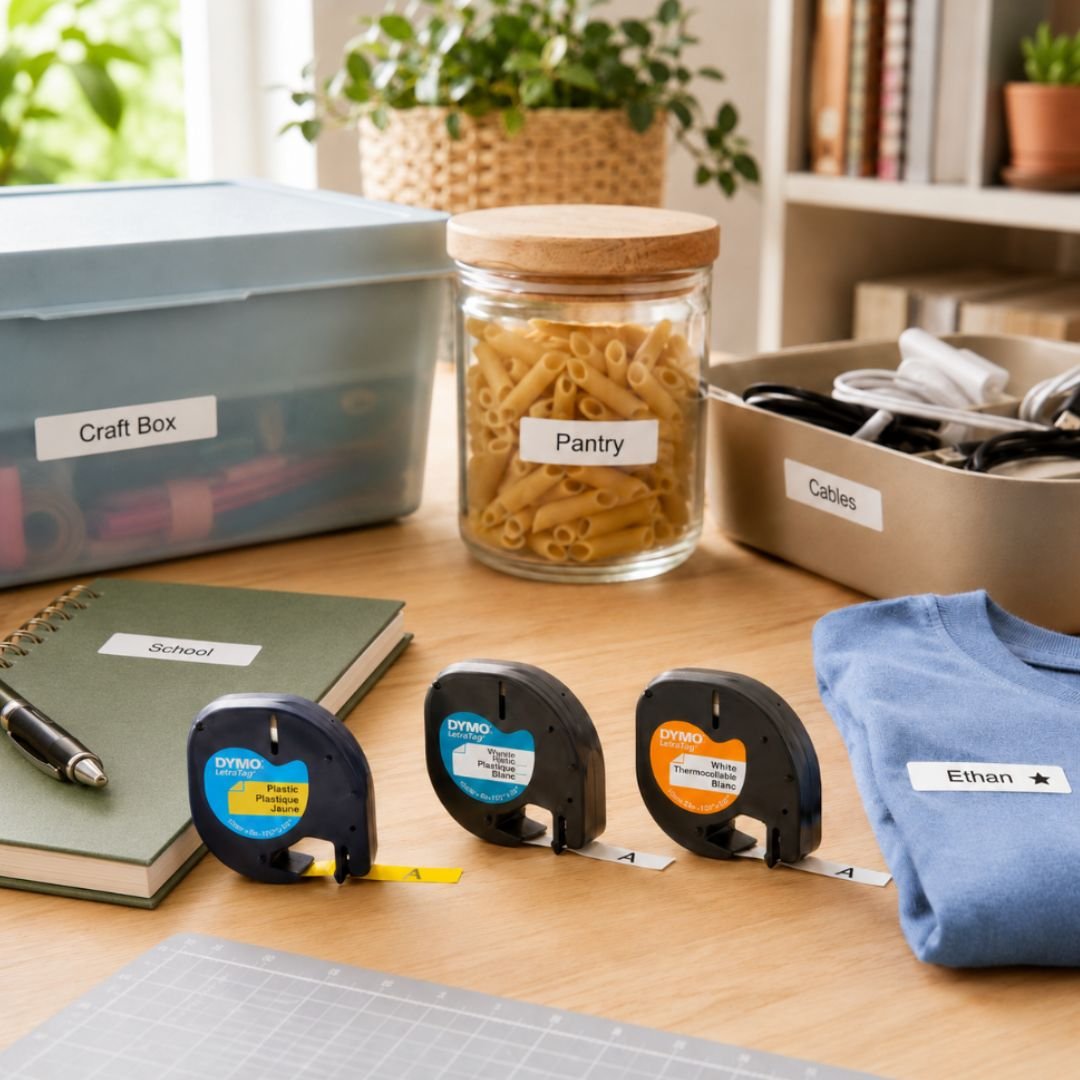
Selecting the wrong label tape isn't just a minor inconvenience; it's often the primary reason why an organised pantry turns into a mess of peeling plastic and faded ink. Many users assume all dymo letratag refills are created equal, but applying a paper label to a damp container or a plastic tape to a school uniform is a recipe for frustration. It's a common struggle for Australian households and offices when labels fail to survive the local climate or the rigours of daily use.
We believe that clarity and durability are non-negotiable for professional organisation. This guide explains the technical differences between paper, plastic, and iron-on tapes to ensure your labels remain legible and adhered in any environment. We will examine the specific benefits of water-resistant plastic for kitchen use, the value of paper for office filing, and how to identify the best value packs for bulk labelling tasks to ensure you get the best performance from your equipment.
Key Takeaways
- Understand why thermal printing technology eliminates the need for ink or toner, making your labelling process more efficient and cost-effective.
- Learn how to select the correct dymo letratag refills for specific environments, ensuring labels don't peel off kitchen containers or fade in storage.
- Discover how iron-on fabric tapes can help organise school uniforms and minimise lost property in busy Australian households.
- Identify the essential maintenance tasks, such as cleaning the cutter blade, to prevent adhesive build-up and protect your printer's longevity.
- Recognise the technical risks of using non-genuine tapes, including potential adhesive seepage and damage to the thermal print head.
Understanding the LetraTag Refill Ecosystem: More Than Just Labels
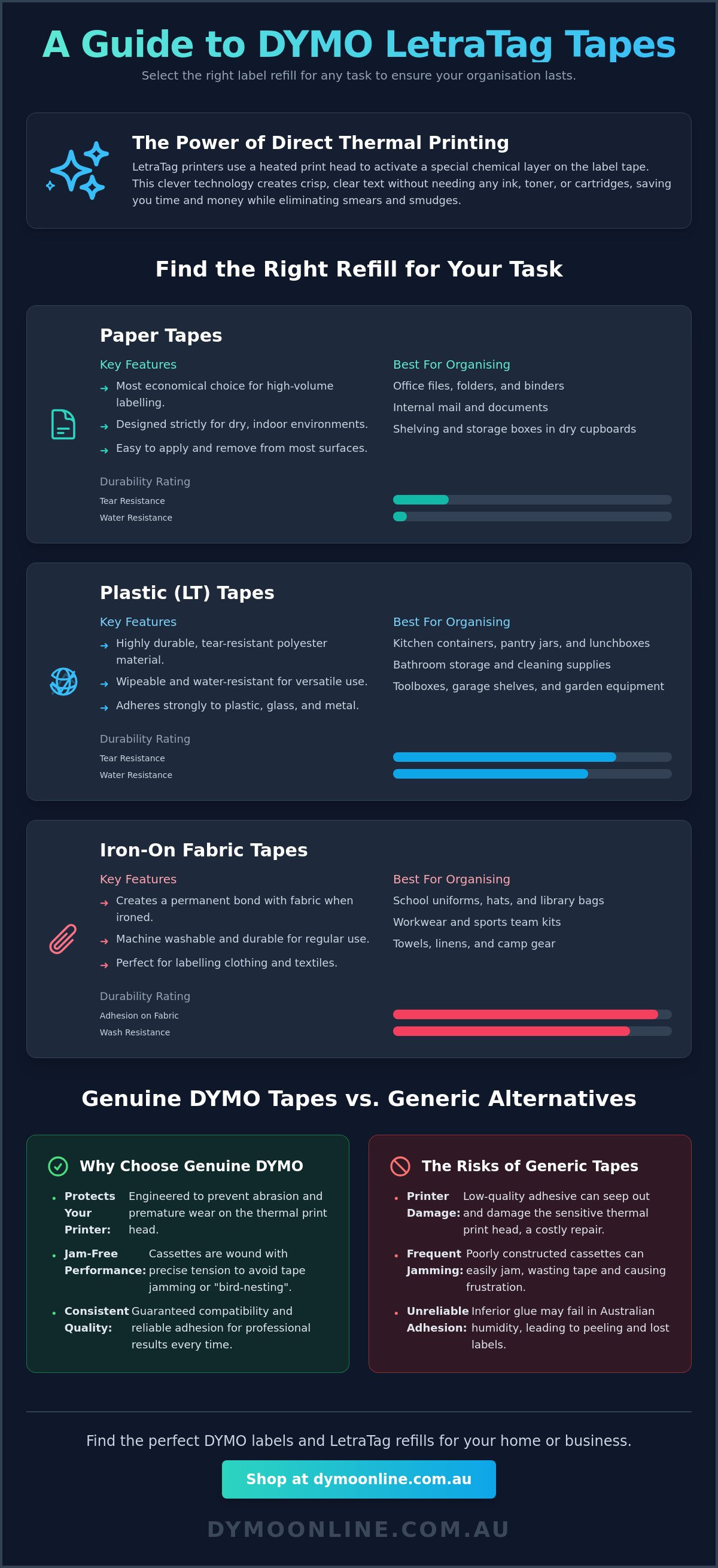
The LetraTag system is built on direct thermal technology. Looking back at DYMO's history, the shift toward ink-free printing revolutionised home and office organisation. You don't need to worry about messy cartridges or expensive toners. Instead, the printer uses a heated head to activate a chemical layer within the tape itself. This process ensures that your dymo letratag refills produce crisp, black text every time. Because the heat is applied directly, there's no risk of ink smearing or running, which is essential for maintaining professional standards in Australian businesses.
Every cassette in this range features a standard 12mm width. This uniform size allows the tapes to fit perfectly into any LetraTag model, from the classic handheld devices to the modern Bluetooth-enabled 200B. Reliability is a hallmark of this ecosystem. As an Australian specialist, DymoOnline provides these genuine tapes with a split-back design that makes peeling the backing off a simple task. This is particularly helpful when you're labelling a large batch of office files or kitchen jars with your dymo letratag refills.
To better understand how to correctly load these cassettes into your machine, watch this helpful video:
The Anatomy of a LetraTag Tape Cassette
A genuine cassette is more than just a plastic shell; it's a precisely engineered delivery system. Inside, the tape and the protective layers are wound with specific tension to prevent the "bird-nesting" or jamming common in cheaper alternatives. This internal mechanism is designed to protect the thermal print head from abrasion and premature wear. The cassette housing is also designed with environmental responsibility in mind. The plastic components are often recyclable, which helps to reduce the waste footprint of your home office or commercial workspace.
Why Material Choice Dictates Label Longevity
Selecting the right material for your dymo letratag refills is a technical decision based on your specific environment. In Australia, high humidity can cause inferior adhesives to fail on smooth surfaces. While paper labels provide a cost-effective solution for dry indoor storage, they won't withstand the moisture of a fridge or the heat of a laundry. The LetraTag range offers four primary material types to suit different needs:
- Paper: The most economical choice for indoor, temporary labelling on dry surfaces.
- Plastic (LT): Durable, tear-resistant, and wipeable for kitchen and bathroom use.
- Metallic: Provides a professional, premium finish for decorative or high-visibility projects.
- Iron-on: Designed for permanent bonding to fabrics, making it ideal for school uniforms and hats.
Understanding these differences ensures your labels stay stuck regardless of the surface texture or ambient temperature. Choosing the correct adhesive chemistry is the first step toward a permanent organisational solution.
Comparing LetraTag Refill Materials: A Technical Breakdown
Choosing the right material for your dymo letratag refills transforms a simple label into a long-term organisational tool. While the external cassette remains identical across the range, the substrate material determines how the label interacts with its environment. Understanding the benefits of an organized workplace often starts with choosing supplies that won't fail after a few weeks of use. Whether you're managing a school stockroom or a home pantry, the material choice is your first line of defence against lost information.
Paper refills represent the most economical path for high-volume indoor tasks. They're perfect for temporary storage boxes, internal office mail, and paper-based filing systems where moisture isn't a factor. However, for items that face daily Australian humidity or frequent physical contact, transitioning to plastic (LT) refills is necessary. These polyester-based tapes offer superior tear resistance and can be wiped clean without damaging the printed text. This makes them the standard for items that require regular handling.
Paper vs. Plastic: When to Upgrade
The primary technical difference lies in the tensile strength and adhesive resilience. Paper labels will tear easily and absorb oils from fingertips, which eventually leads to illegibility. In contrast, LetraTag plastic tapes are engineered to withstand light moisture and abrasion. If you're labelling containers in a kitchen or laundry, the plastic variant is the logical choice. While the initial investment is slightly higher than paper, the durability reduces the need for frequent replacement, offering better long-term value for busy households and retailers.
Specialised Refills: Metallic and Iron-On
Metallic refills provide a high-contrast finish that is particularly effective for asset labelling and creating premium gift tags. The reflective surface ensures high visibility in low-light storage areas, such as warehouses or dark cupboards. For fabric applications, iron-on refills provide a permanent bonding solution that differs significantly from standard pressure-sensitive adhesives. These labels require a specific heat setting on a dry iron to melt the adhesive into the fabric fibres. This creates a bond that survives repeated washing machine cycles, making it the standard for school jumpers, hats, and childcare items. If you have technical questions about specific surface compatibility, you can always speak with our specialist team for guidance.
Matching Refills to Australian Use Cases
Matching your dymo letratag refills to the specific environment is the only way to ensure your organisational system doesn't fail. In the Australian home, environments range from the high humidity of a coastal kitchen to the dusty shelves of a suburban garage. Each space demands a different adhesive and material property to maintain legibility over the long term. Using the wrong tape often leads to peeling or fading, which undermines the effort put into sorting your space.
For the home office, paper refills are often the most practical choice. They allow you to categorise tax records, archive boxes, and stationery supplies without unnecessary expense. However, when you move to the garage or workshop, the requirements change significantly. Metallic or plastic tapes are better suited for identifying heavy-duty shelving and toolboxes. These materials resist the oils, solvents, and temperature fluctuations often found in outdoor storage spaces, ensuring your equipment remains easy to locate.
Organising the Modern Australian Pantry
A well-ordered kitchen relies on labels that can survive being handled with damp or oily hands. Plastic refills are essential for both glass and plastic containers because they don't absorb moisture like paper variants do. If you are aiming for a specific aesthetic or layout, you can find detailed inspiration in our guide on Home Organisation Basics with Dymo LetraTag. For fridge or freezer storage, it's vital to ensure the container surface is completely dry and at room temperature before applying the label. Once the adhesive has had time to set, these plastic labels will remain secure even in cold temperatures.
Back-to-School Labelling Strategies
For organisations or clubs requiring more than just individual name tags, professional custom clothing and merchandise printing from RAW Merch offers a durable way to produce high-quality branded gear for any team.
Compatibility and Maintenance: Ensuring Your Printer Lasts
The LetraTag system is prized for its longevity and consistent design. Since the introduction of the range, the physical dimensions of the tape cassette have remained unchanged. This means that modern dymo letratag refills are fully backwards compatible with older handheld units and the latest Bluetooth models alike. Maintaining this standard ensures that Australian users don't need to worry about their supplies becoming obsolete when they upgrade their hardware. Reliability in the feed mechanism is paramount for a professional finish, and this starts with understanding how the tape interacts with your specific device.
Thermal printing relies on a precise transfer of heat from the print head to the tape substrate. If your labels appear faint or patchy, the issue is rarely the tape itself. It's typically a sign of declining battery health. Portable LetraTag models require a strong, consistent voltage to reach the necessary temperature for dark, crisp text. Using high-quality alkaline batteries rather than heavy-duty variants will often resolve clarity issues immediately. If you've recently moved your workspace, remember that extreme temperature fluctuations can also affect adhesive performance. Storing your machine and refills in a cool, dry place prevents the adhesive from degrading before it's even applied.
LetraTag Machine Compatibility Checklist
The universal cassette design ensures a perfect fit for the Dymo LetraTag 200B, as well as the legacy LT-100H and LT-100T models. However, it's a common mistake to assume these tapes work in all DYMO machines. LetraTag cassettes use a specific, compact geometry that is fundamentally different from the D1 tapes used in LabelManager units or the heavy-duty rolls required for Rhino industrial printers. Always check for the "LetraTag" branding on your device to ensure you're purchasing the correct 12mm refills. This distinction prevents mechanical jams and protects the internal gears of your machine.
Maintaining Your Label Maker for Peak Performance
To keep your Dymo LetraTag machine functioning like new, regular cleaning of the internal components is required. Adhesive build-up on the cutter blade is the most frequent cause of tape jams. Every cut leaves a microscopic residue; over time, this sticky layer prevents the blade from retracting fully. You can safely clean the blade and the thermal print head using a cotton bud dipped in a small amount of isopropyl alcohol. Avoid using sharp objects or harsh household chemicals, as these can permanently scratch the delicate heating elements. If you notice the tape is snagging or the cutter requires excessive force, it's time for a quick maintenance check. For more complex troubleshooting or advice on spare parts, contact our specialist team for technical support.
The Value of Genuine DYMO Refills vs. Generic Alternatives
Choosing between genuine dymo letratag refills and third-party alternatives is a decision that impacts both label longevity and the health of your hardware. While generic tapes often attract users with a lower entry price, the technical trade-offs are significant. Genuine DYMO engineering focuses on a specific "razor and blade" model where the cassette is designed to provide exact feed tension. This precision prevents the tape from slipping or bunching during the thermal printing process. In contrast, third-party refills often vary in thickness, which puts unnecessary strain on the motor and can lead to permanent mechanical failure in portable LetraTag units.
The most critical risk associated with non-genuine tapes is adhesive seepage. Under the heat of the thermal print head, inferior adhesives used in generic tapes can soften and bleed from the edges of the substrate. This residue coats the internal gears and the thermal head, accelerating the build-up we discussed in our maintenance section. Authentic Australian stock is formulated to remain stable under heat. You can identify genuine dymo letratag refills by checking for the official holographic security seal and Australian retail packaging, which ensures the product has been stored and transported under controlled conditions to maintain adhesive integrity.
Why Consistency Matters in Labelling
Professional organisation requires visual consistency. Genuine DYMO tapes ensure that a "Blue Plastic" label bought today will perfectly match the colour and texture of one purchased twelve months ago. This is essential for large-scale filing projects or retail shelving where a uniform appearance is required. Additionally, genuine refills are engineered with superior UV resistance. In the harsh Australian climate, labels placed near windows or in well-lit offices are prone to fading. Third-party substrates often yellow or lose their print contrast within months, whereas genuine polyester-based plastic tapes are built to remain legible for years.
Buying Smart: Bulk and Multi-Pack Options
Maximising the value of your labelling budget doesn't require switching to inferior generic products. Instead, savvy users focus on the cost-per-metre by opting for multi-packs and larger quantities. Twin packs of plastic tapes often provide a more economical rate than single rolls. For commercial environments or extensive home relocation projects, exploring Bulk Dymo options is the most effective way to reduce costs while maintaining high standards. Investing in the right refill today eliminates the hidden costs of re-labelling and printer repairs tomorrow. Choosing authentic supplies ensures that your organisational system remains a permanent asset rather than a recurring maintenance task.
Optimise Your Labelling System for Long-Term Success
Building a reliable organisational system requires more than just a label maker; it demands the correct substrate for your specific application. As explored in this guide, selecting the right dymo letratag refills ensures your efforts aren't wasted on peeling paper or faded text. Whether you're managing a busy Australian warehouse or simply categorising school supplies, the technical choice between plastic, metallic, or iron-on tapes directly impacts the durability of your labels. Protecting your printer's thermal head by choosing genuine supplies is a small step that prevents costly hardware failure down the track.
As an Authorised Australian DYMO Specialist, DymoOnline provides the authentic stock and specialised knowledge needed to maintain your equipment. We ensure your projects stay on track with same-day dispatch for major metro areas and provide expert technical support through Mega Office Supplies. If you're ready to upgrade your current setup or need guidance on bulk requirements, you can browse our range or contact our team for professional assistance. High-quality labelling is the foundation of an efficient workspace, and we're here to help you get it right the first time.
Frequently Asked Questions
Are Dymo LetraTag refills waterproof for use on drink bottles?
Plastic LetraTag tapes are water-resistant and suitable for items that require occasional wiping with a damp cloth. They aren't classified as fully waterproof for prolonged submersion or high-temperature dishwasher cycles. For school drink bottles, they provide a reliable short-term solution, but you should expect some wear over time if the bottle is washed daily. Always apply the label to a dry surface to ensure the adhesive bonds correctly.
Can I use LetraTag tapes in my Dymo LabelManager printer?
No, LetraTag cassettes are not compatible with LabelManager devices. These printers require D1 standard tapes, which feature a different physical housing and internal mechanism. While both systems produce high-quality labels, the 12mm dymo letratag refills are specifically engineered for the LetraTag LT-100H, LT-100T, and 200B models. Attempting to force a cassette into the wrong machine can damage the internal gears or the thermal print head.
How do I stop my LetraTag labels from peeling off plastic containers?
Adhesion failure is usually caused by surface contaminants like dust, oils, or moisture. Clean the plastic container thoroughly with isopropyl alcohol and let it dry completely before application. Avoid applying labels to highly textured or curved surfaces where the tension might cause the edges to lift. Choosing plastic refills over paper variants also improves performance on kitchen containers, as the polyester backing is more resilient to the expansion and contraction of plastic.
What is the difference between paper and plastic LetraTag refills?
Paper refills are the most economical choice for dry, indoor applications like filing and archive boxes. They are easy to tear and provide a matte finish. Plastic refills are made from a durable polyester material that is tear-resistant and wipeable. This makes them the professional standard for high-touch items, kitchen storage, and environments where light moisture is present. Both materials use the same 12mm width and are interchangeable within any LetraTag machine.
How do I apply LetraTag iron-on labels so they don’t come off in the wash?
Successful fabric adhesion requires heat and pressure to melt the adhesive into the garment fibres. Use a dry iron set to a medium-high temperature and turn off the steam function entirely. Press the iron firmly over the label for 10 to 15 seconds without moving it back and forth. Allow the garment to cool completely before testing the edges. When applied correctly, these dymo letratag refills will withstand repeated laundry cycles.
Why is my LetraTag printer not cutting the tape properly?
A failure to cut is almost always caused by adhesive residue build-up on the cutter blade. Every time you cut a label, a microscopic amount of adhesive can stick to the metal. Over time, this makes the blade sticky and prevents a clean shear. You can resolve this by carefully cleaning the blade with a cotton bud dipped in isopropyl alcohol. Ensure the machine is turned off and the blade is fully retracted before you begin cleaning.
Are there different widths available for LetraTag refills?
No, the LetraTag system uses a universal 12mm tape width. This single standard ensures that all refills fit every model in the range, from legacy handheld units to the modern Bluetooth versions. While you cannot change the width of the tape, you can adjust the font size and style within the printer settings to maximise the use of the 12mm vertical space. This consistency simplifies inventory management for Australian home offices and small businesses.
How long do LetraTag labels last before they start to fade?
The lifespan of a label depends heavily on its exposure to UV light and heat. Indoors and away from direct windows, LetraTag labels can remain crisp and legible for several years. However, the harsh Australian sun will eventually cause the thermal print to fade. Plastic tapes generally offer better UV resistance than paper versions. If you require labels for permanent outdoor use or industrial environments, you might consider the Rhino range of specialised industrial supplies instead.

Article by
DymoOnline Team
The DYMOOnline Team provides practical guidance for Australian businesses, warehouses, retailers, offices, schools, healthcare workplaces and home users who rely on accurate, efficient labelling. DYMOOnline specialises in DYMO label makers, DYMO label printers, label tapes, label rolls, shipping labels, address labels, barcode labels and labelling accessories, helping customers choose the right labelling products for organisation, mailing, inventory, filing, pricing and workplace efficiency.
General Information
This article is provided as general information only to help customers compare and choose DYMO label makers, label printers, label tapes, label rolls, shipping labels, address labels, barcode labels and related labelling supplies. Product details, specifications, compatibility, availability, pricing and suitability may vary. Always check the individual product page, manufacturer information, printer model compatibility and label size requirements before purchasing or using a product.
Latest News
Asset Tag Printer: 2026 Australian Buying Guide
When an expensive piece of portable equipment goes missing from a job site or office, the real cos...
Asset Labelling Solutions for Australian Schools: The 2026 Buying Guide
Imagine walking into a classroom at the end of term only to find that dozens of new student laptop...
The Ultimate Guide to Professional Archive Box Labelling Systems
Imagine the frustration of an urgent compliance audit where the only thing standing between you an...
How to Print Address Labels from Excel: A Step-by-Step Guide for Australian Businesses
How much time did your team spend this week manually typing customer addresses into a template, on...
The Truth About Dymo Labels: Myth-Busting Genuine vs Generic in 2026
On a busy Monday morning, an Australian business owner discovers their printer has ground to a hal...
Best Address Label Printer for Mac in Australia: 2026 Buying Guide
Updating your macOS shouldn't feel like a gamble with your office hardware, yet many Australian prof...